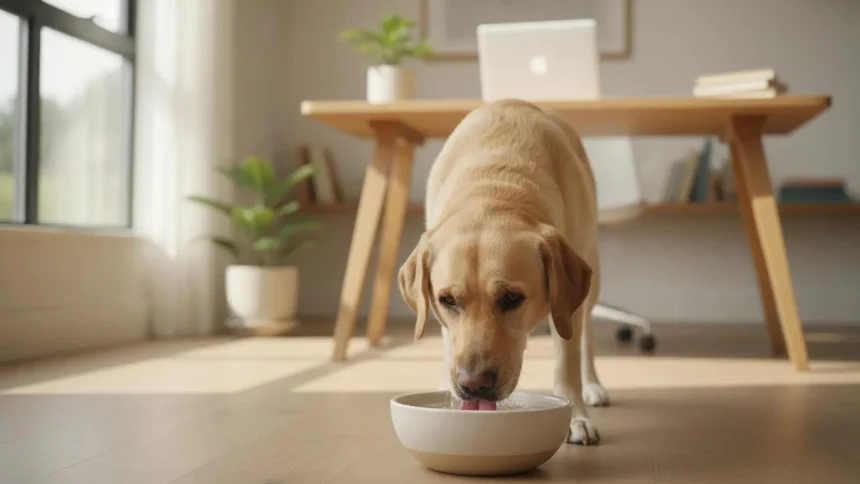
You fill your dog’s water bowl in the morning, only to find it empty again a few hours later. Perhaps your dog is also asking to go outside more often, waking you up at night to urinate, or having accidents indoors despite being house-trained.
Increased thirst can be completely normal after exercise, during hot weather, or after eating a particularly dry or salty meal. But when a dog consistently drinks more than usual, especially alongside changes in urination, it is worth paying attention.
The important question is not simply how much water your dog drinks on one particular day. It is whether the change is unusual for your dog, persists without an obvious explanation, or comes with other signs of illness.
1. How Much Water Does a Dog Normally Need?
Water needs vary with body size, diet, activity, temperature, age, and health. Dogs eating mostly dry food generally obtain more of their water from drinking than dogs eating moisture-rich wet food.
A commonly used rough reference is around 40–60 milliliters of water per kilogram of body weight per day, although individual needs can fall outside this range. Hot weather, strenuous exercise, lactation, and certain diets can increase water requirements.
Veterinarians may investigate persistent drinking above roughly 100 milliliters per kilogram per day, but this is a guide rather than a diagnosis. A dog drinking less than that can still have a medical problem if the increase is significant for that individual.
For example, a change from your dog’s usual drinking habits may matter more than a single measurement. If your dog has suddenly started emptying the bowl several times a day without a clear reason, take note even if you are unsure of the exact amount.
2. Common Reasons a Dog May Drink More
Hot weather and increased activity
Dogs may drink more after a long walk, a play session, or time spent outdoors in warm weather. Panting helps them regulate body temperature and can increase their need for water.
If the increase follows a clear change in activity or temperature and returns to normal afterward, it may be an ordinary response. However, persistent thirst that continues on quiet, cool days deserves closer attention.
A change in food or treats
Switching from wet food to dry food can increase drinking because dry food contains much less moisture. Some treats or foods with higher salt content may also temporarily increase thirst.
Think about recent changes in your dog’s diet, including new treats, food toppers, or access to salty human food. Do not deliberately restrict water to test whether the thirst improves.
Stress or changes in routine
Changes in the household, travel, unusual activity, or anxiety can affect a dog’s normal routines. Some dogs may drink at different times or appear to visit the water bowl more often when their environment changes.
Still, do not assume stress is the explanation when the increase is persistent or accompanied by frequent urination, weight loss, vomiting, or low energy.
3. Medical Conditions That Can Cause Excessive Thirst
When increased drinking continues without an obvious environmental or dietary explanation, several medical conditions may need to be considered. A veterinary examination is needed to distinguish among them.
Diabetes mellitus
Dogs with diabetes mellitus may drink and urinate more because excess glucose in the bloodstream can cause glucose to spill into the urine, drawing additional water with it.
Other possible signs include increased appetite, unexplained weight loss, and reduced energy. Some dogs develop cataracts as the disease progresses. These signs do not prove diabetes, but they are reasons to arrange veterinary testing.
Kidney disease
The kidneys help regulate water balance and remove waste products from the body. When kidney function is impaired, a dog may lose the ability to concentrate urine effectively and begin drinking and urinating more.
Other changes can include reduced appetite, nausea, vomiting, weight loss, or a generally unwell appearance. Early kidney disease may cause few obvious signs, so persistent changes in thirst should not be dismissed simply because your dog otherwise seems normal.
Cushing’s disease
Cushing’s disease occurs when a dog is exposed to excessive cortisol over time. Increased thirst and urination are common signs, and some dogs also develop a larger-looking abdomen, increased appetite, panting, or changes in their skin and coat.
These signs can overlap with other conditions. Your veterinarian may recommend specific tests if the overall pattern makes Cushing’s disease a possibility.
Urinary tract and other health problems
Bladder inflammation, urinary infections, certain medications, and other medical conditions may affect drinking or urination. Not every dog that urinates frequently is producing a larger total volume of urine.
For example, a dog with bladder irritation may repeatedly squat and pass only small amounts. A dog producing unusually large amounts of urine may have a different underlying problem. The distinction can help your veterinarian decide which tests are appropriate.

4. Pay Attention to Changes in Urination
Increased thirst becomes more informative when you also notice how your dog urinates. Consider the whole pattern rather than focusing on the water bowl alone.
- Larger or more frequent urine output: Your dog may need more outdoor breaks, produce larger puddles, or wake during the night to urinate.
- Repeated attempts with little urine: Your dog may have irritation, inflammation, or a blockage rather than simply producing more urine.
- Accidents indoors: A previously reliable dog may suddenly begin urinating indoors because it cannot comfortably wait as long.
- Changes in urine appearance: Blood, an unusual color, or a strong new odor should be discussed with a veterinarian.
Straining to urinate, repeated attempts that produce little or no urine, or obvious pain require urgent veterinary attention. Inability to pass urine is an emergency, particularly in male dogs.
5. What You Can Record at Home
A few days of careful observation can give your veterinarian useful information. Do not delay seeking care to complete a log if your dog seems unwell or has urgent symptoms.
Measure water intake when practical
For a healthy-looking dog with no emergency signs, you can estimate how much water is consumed over 24 hours. Measure what you put in the bowl and what remains, while accounting for spills and water shared with other pets.
If several animals share a bowl, the measurement will not tell you exactly how much your dog drinks. You can temporarily offer separate bowls in a comfortable setting if this does not cause stress or restrict access to water.
Note food, weather, and activity
Write down any recent food changes, unusually salty treats, long exercise sessions, hot days, or medication changes. Include whether your dog is eating normally and whether its weight or energy level has changed.
Track bathroom habits
Note whether your dog is passing larger amounts of urine, asking to go out more frequently, having accidents, or straining. These details are often more useful than simply reporting that your dog seems to pee a lot.
Never withhold water to see whether the symptoms disappear. Restricting water can cause dehydration and may be dangerous for a dog with an underlying illness.
6. When Should You Call the Vet?
Contact your veterinarian if your dog is consistently drinking more than usual, urinating more often, or developing new accidents without an obvious short-term explanation. Arrange a prompt appointment if the change comes with weight loss, increased appetite, reduced energy, vomiting, or a noticeable change in overall behavior.
Seek urgent veterinary care if your dog repeatedly tries to urinate but produces little or nothing, appears severely weak, collapses, has repeated vomiting, or seems seriously unwell. If excessive thirst develops alongside heavy panting, drooling, confusion, or weakness after heat exposure, treat possible heatstroke as an emergency.
Do not wait for several days of observation when serious symptoms are present. Your veterinarian can advise how quickly your dog needs to be seen based on its condition and medical history.
7. What to Expect at a Veterinary Visit
Your veterinarian will usually ask when the change began, whether urine output has increased, what your dog eats, which medications it takes, and whether other symptoms are present.
Depending on the findings, testing may include blood work and a urinalysis. These can help assess blood glucose, kidney function, urine concentration, and signs of infection or other abnormalities. Additional tests may be needed if a hormonal disorder or another specific condition is suspected.
Bring your notes about water intake and urination if you have them. Tell the veterinarian about supplements and medications too, including any recent changes. Do not stop prescribed medication without professional advice.
Treatment depends on the cause. Some dogs need a change in management, while others require medication or ongoing monitoring. The earlier the underlying problem is identified, the sooner an appropriate plan can begin.
Your dog’s water bowl can provide a useful clue about its health. A thirsty day after exercise is usually different from a lasting change in drinking and bathroom habits. Keep fresh water available, watch for patterns, and seek veterinary advice when the change persists or appears alongside other symptoms.