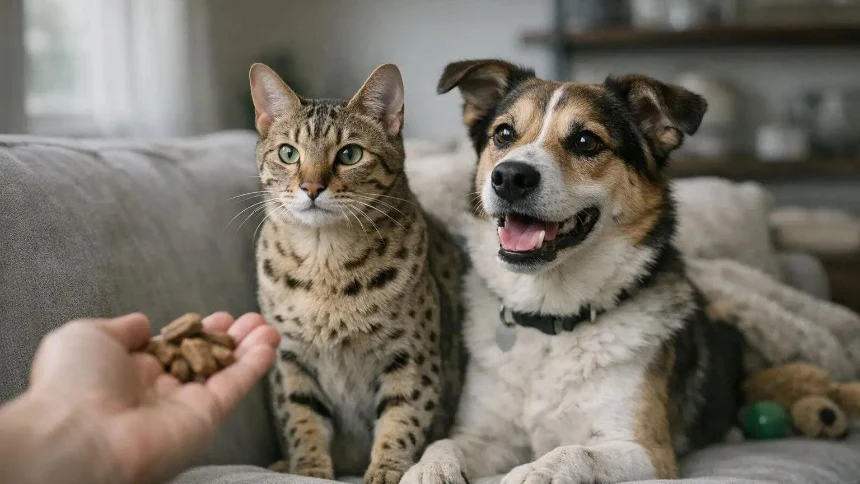
A tiny training treat, a dental chew, a spoonful of food from your plate, and a few extra snacks from another family member may not seem like much. But by the end of the day, these little extras can add up to a meaningful part of your pet’s diet.
Treats can make training easier, provide enrichment, and strengthen the bond between you and your pet. The problem begins when snacks become so frequent that they replace too much of the food designed to meet your pet’s nutritional needs.
Rather than eliminating treats altogether, the goal is to understand how they fit into your pet’s daily calorie intake and feeding routine.
Why Treat Calories Matter More Than You Think
Many commercial treats are designed to be appealing, convenient, or enjoyable to chew. They are not necessarily formulated to provide all the nutrients a dog or cat needs each day.
A complete and balanced pet food is formulated to supply essential nutrients in appropriate proportions for the life stage stated on its label. When too many calories come from foods that are not nutritionally complete, they can dilute the contribution of the main diet.
Extra calories also accumulate quickly in smaller pets. A snack that seems insignificant for a large dog may represent a much larger share of a small dog’s daily energy needs. Cats can face the same issue, particularly when several small treats are offered throughout the day.
The number of treats matters, but so does their calorie content. A few large biscuits may contribute more energy than several tiny training rewards.
The 10% Guideline: A Useful Starting Point
Veterinary nutrition guidelines commonly recommend that treats and other non-complete food extras provide no more than about 10% of a pet’s daily calorie intake. The remaining calories should generally come from a suitable complete and balanced diet.
For example, if a veterinarian determines that a healthy adult pet needs 500 calories per day, the 10% guideline would allow up to 50 calories from treats and other extras combined.
That is a ceiling, not a target that every pet needs to reach. Some pets need fewer extras, especially if they are overweight, have a medical condition, or eat a specially formulated therapeutic diet.
For cats in particular, do not automatically reduce a nutritionally complete diet to make room for treats. Research has raised concerns that this approach may leave some cats short of essential nutrients, depending on their energy needs and the foods involved. If your cat has a low calorie requirement or needs weight management, ask your veterinarian how to balance treats and complete food safely.
How to Calculate Your Pet’s Daily Treat Budget
You do not need to count every crumb with laboratory precision. A simple routine can make treat portions much more consistent.
1. Start with your pet’s daily calorie needs
Use the daily calorie guidance provided by your veterinarian or the feeding plan established for your pet. Package feeding charts can offer a starting estimate, but actual needs vary with body size, age, activity, neuter status, body condition, and health.
2. Check the calories in each treat
Look for the calorie information on the package or manufacturer’s website. If the value is not available, ask the manufacturer rather than guessing. Remember that chews, food toppers, table scraps, and food used to hide medication can contribute calories too.
3. Add up everything offered during the day
Keep track of snacks from every family member, not just the person who fills the food bowl. A shared treat container can help everyone see how much has already been given.
4. Adjust based on your pet’s condition
Monitor body weight and body condition over time. If your pet is gaining excess weight, review the entire feeding routine with your veterinarian instead of simply switching to a different treat brand.

Better Ways to Use Treats During Training
Treats are useful rewards, but effective training does not require a large snack every time. The size and timing of the reward often matter more than offering a big piece of food.
- Break treats into smaller pieces. Choose pieces your pet can eat quickly so training remains focused on the behavior rather than a long chewing break.
- Reserve part of the daily food allowance. For pets that enjoy their regular kibble, set aside a portion of the measured daily ration for training. This is especially helpful when the food is suitable for the training activity and the pet is motivated by it.
- Use non-food rewards too. Play, praise, gentle interaction, or access to a favorite activity may work well for some pets, depending on what they find rewarding.
- Keep sessions short and positive. Stop before your pet becomes tired, frustrated, or distracted. More treats are not a substitute for clear, consistent training.
For cats, interactive play can be a valuable alternative to repeatedly offering snacks. For dogs, a brief game or enthusiastic praise may be rewarding in situations where food is not necessary.
Are Human Foods a Better Treat Choice?
Not automatically. Some plain foods can be suitable occasional treats for certain healthy pets, but human food still contributes calories and may contain ingredients that are unsafe for animals.
For dogs, small portions of appropriate plain vegetables may be useful options for some households. However, preparation and ingredients matter: onions, garlic, grapes, raisins, chocolate, and products containing xylitol are among the foods or ingredients that can be dangerous to dogs.
Cats have different nutritional needs and should not be given a diet built around human snacks. If offering a small amount of plain food, make sure it is safe for cats and appropriate for that individual animal.
Avoid assuming that a food is safe simply because it is natural, homemade, or marketed as healthy for people. Also be cautious with very hard chews, cooked bones, and raw animal-based treats, which can present risks such as dental injury, obstruction, or contamination.
What About Dental Chews, Supplements, and Food Toppers?
These items are easy to overlook because they may not look like ordinary treats. However, dental chews, flavored supplements, soft medication treats, and food toppers can all contribute to daily calorie intake.
Read product directions carefully and consider the purpose of each item. A dental chew is not automatically a substitute for a complete diet or a comprehensive dental-care plan. Similarly, supplements should be used for a clear reason rather than added simply because they seem beneficial.
If your pet takes prescribed medication or follows a veterinary therapeutic diet, ask the veterinary team which foods or treats are compatible. Some additional foods may interfere with the purpose of a specialized diet.

How to Stop Treats From Becoming Extra Meals
Most overfeeding does not happen because of one unusually large snack. It often develops through small, repeated habits that nobody notices.
- Measure the day’s treats into one container instead of repeatedly reaching into the packet.
- Tell family members which treats have already been offered.
- Keep snacks out of reach when food is being prepared.
- Use a portion of the normal daily food allowance for rewards when appropriate.
- Review treat amounts whenever your pet’s activity level, body weight, or health changes.
If your pet begs frequently, consider whether they may also be seeking attention, activity, or a predictable routine. A short play session, a walk appropriate for the dog’s health, or a food puzzle may sometimes meet the need better than another snack.
When Your Pet Needs an Individual Feeding Plan
The right treat allowance is not the same for every animal. Puppies and kittens are growing, senior pets may have changing needs, and animals with diabetes, digestive disease, food sensitivities, kidney disease, or weight problems may require more careful planning.
For pets on a prescription diet, even seemingly small extras can undermine the purpose of that diet. Ask your veterinarian which rewards are appropriate rather than assuming that a small quantity is always harmless.
Also seek veterinary advice if your pet is gaining or losing weight unexpectedly, seems unusually hungry despite eating normally, or develops digestive symptoms after new treats are introduced.
Treats can remain a happy part of life with your pet. The most reliable approach is to choose suitable options, keep portions intentional, and make sure extras do not crowd out the nutrition your dog or cat depends on every day.