You reach for the nail clippers, and your dog immediately pulls a paw away. Maybe your dog hides under the table, licks their lips, or becomes unusually still as soon as you touch a foot. What should be a simple grooming task can quickly turn into a struggle.
Many dogs find paw handling uncomfortable, especially if they have had a painful nail trim in the past. Others are simply unfamiliar with the sensation of having their toes held or hearing the click of a clipper.
The solution is not necessarily a different pair of clippers. Often, the most useful first step is helping your dog feel comfortable with the process before attempting to shorten a single nail.
Why Nail Trimming Can Feel So Difficult for Dogs
A dog’s nails contain a sensitive inner structure called the quick, which includes blood vessels and nerves. Cutting into it can cause pain and bleeding. Even without an injury, holding a paw firmly or pulling a toe into an unfamiliar position may make some dogs uneasy.
Past experiences can influence how a dog reacts. If a previous trim hurt, the sight of nail clippers may become a warning that something unpleasant is about to happen. Dogs may also react to the sound and vibration of an electric nail grinder.
Some dogs are more sensitive about their feet than others. A dog with arthritis, an injured paw, or another painful condition may resist handling because the movement itself hurts.
If your dog has suddenly started resisting nail care after previously tolerating it, do not assume the problem is simply stubbornness. Check for tenderness, broken nails, swelling, or other changes, and consult a veterinarian if discomfort is suspected.
Know When Your Dog Actually Needs a Trim
There is no single schedule that works for every dog. Nail growth, daily activity, walking surfaces, and individual anatomy all influence how often trimming is needed.
Look at your dog’s nails while they stand naturally on a level surface. If the nails touch the floor or click noticeably during walking, they may be too long. However, sound alone is not a complete assessment, so inspect the nails and ask a professional to show you an appropriate length for your dog.
Pay attention to the dewclaws, which sit higher on the inner side of some paws. Because they may not touch the ground, they can grow longer than the other nails and sometimes curl toward the skin.
Long nails can snag on carpets, split, or interfere with comfortable foot placement. Regular checks help you notice overgrowth before it becomes more difficult to manage.

Build Comfort Before You Introduce the Clippers
If your dog dislikes paw handling, begin with something much easier than a nail trim. Choose a quiet place, keep sessions brief, and have small treats ready. The aim is to help your dog associate gentle handling with something positive rather than feeling trapped until the task is finished.
Start with a simple touch
Sit beside your dog when they are relaxed. Briefly touch the shoulder or leg, offer a treat, and then stop. If your dog remains comfortable, gradually move your hand toward the paw over several sessions.
Do not immediately grab and lift the foot. Some dogs tolerate a gentle touch along the leg but become anxious when a paw is held. Let your dog’s response guide the pace.
Introduce the paw gently
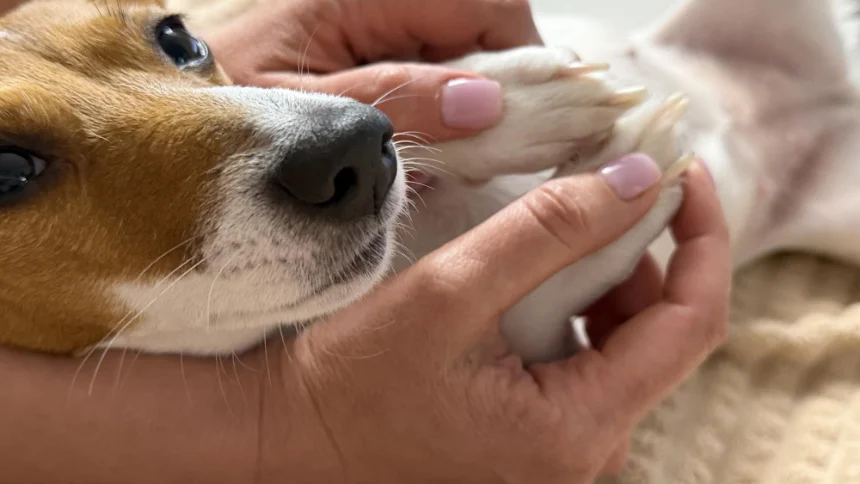
Once your dog accepts leg handling, briefly touch the paw and reward calm behavior. Later, you can progress to gently touching an individual toe. Keep your movements slow and avoid squeezing the toes or pulling the nails outward.
You do not need to reach the next step every day. If your dog pulls away repeatedly, stiffens, or stops accepting treats, return to an easier level or end the session.
Let the tools become familiar
Place the closed clippers on the floor at a comfortable distance and reward your dog for remaining relaxed around them. Over time, you can move them closer, pick them up briefly, and let your dog see them near a paw without cutting anything.
If you use an electric grinder, introduce its sound separately before bringing it near the nails. Do not switch it on beside your dog’s foot without giving them time to become familiar with the noise and vibration.
This gradual process may take days or weeks, depending on the dog. Progress is measured by comfort, not by how quickly you can finish all four paws.
How to Trim a Nail Without Rushing
Once your dog is comfortable with paw handling and the tool, prepare a well-lit area with a nonslip surface. Use a nail trimmer designed for dogs and appropriate for your dog’s nail size. Keep a pet nail styptic product nearby in case you accidentally cut the quick.
If your dog has pale nails, the quick may be visible as a pink area inside the nail. With dark nails, it can be much harder to judge where the sensitive tissue ends. If you cannot identify a safe cutting point, ask a veterinarian or experienced groomer to demonstrate the technique before trying it yourself.
Trim only a small amount from the tip at a time, then inspect the cut surface before deciding whether to continue. Do not attempt to shorten a very long nail in one session; the quick may extend farther toward the tip in overgrown nails.
Hold the paw gently and keep your fingers clear of the cutting blades. If your dog begins moving suddenly, pause rather than trying to make a quick cut while the paw is shifting.
You do not have to finish every nail in one sitting. One calm, successful trim is more useful for future grooming than completing all the nails while your dog is frightened.
Recognize Stress Before It Turns Into a Struggle
Dogs do not always communicate discomfort by growling or trying to escape. Early signs can include turning the head away, repeatedly licking the lips, pulling a paw back, panting when the room is not warm, trembling, or becoming unusually still.
Some dogs stop taking treats when they feel overwhelmed. Others may growl, snap, or try to bite if they believe they cannot escape the situation.
When you notice these signs, stop and give your dog space. Do not punish a growl or force the paw back into position. Those responses can increase fear and make future grooming more difficult.
If your dog’s nails urgently need attention but home handling is unsafe, contact a veterinary clinic or qualified groomer. For dogs with severe fear, your veterinarian may recommend a gradual behavior plan or additional support to make necessary care safer.

What If You Accidentally Cut Too Far?
If you cut into the quick, stop trimming immediately. Keep your dog as calm as possible and apply a pet-safe styptic product according to its instructions. Gentle, steady pressure with clean gauze may also help while you seek advice.
If bleeding does not stop after several minutes, the nail is badly torn, or your dog appears to be in significant pain, contact a veterinarian. A damaged nail can be painful and may need more than basic first aid.
After the immediate problem is handled, give your dog a break. Do not try to finish the remaining nails simply because the clippers are already out. When you resume training, return to an easier step so the next session does not begin with the same level of fear.
Clippers, Grinders, or Professional Help?
Traditional nail clippers can remove the tip quickly, but they require careful positioning and control. A grinder gradually wears down the nail and may be useful for some dogs, although its sound, vibration, and heat can be uncomfortable if used incorrectly.
Neither tool is automatically best for every dog. Choose equipment that fits the size and shape of the nails, and learn how to use it safely. With a grinder, follow the manufacturer’s directions, keep hair away from moving parts, and avoid holding it against one area long enough for heat to build up.
Professional grooming is a sensible option when you are uncertain about technique or your dog cannot remain comfortable. Veterinary care is especially important if the nails are severely overgrown, curling into the skin, split near the base, or associated with swelling and pain.
For a dog with intense fear, a veterinary team can help decide whether a different handling plan or medication is appropriate. Do not give human medication or sedatives to make grooming easier unless a veterinarian has specifically instructed you to do so.
A calmer nail-care routine begins well before the clippers touch a nail. By making paw handling familiar, watching your dog’s body language, and stopping before fear escalates, you can turn a stressful task into a manageable part of everyday care. Some dogs will always need professional help, and that is perfectly fine; what matters is keeping the process safe and as comfortable as possible.