A dog’s breath may not smell like mint, but a strong, persistent odor is not something you should automatically accept as normal. If your dog suddenly develops foul breath, turns away from its food, or seems uncomfortable when chewing, its mouth may need attention.
Bad breath, also called halitosis, often develops when bacteria accumulate around the teeth and gums. However, dental disease is not the only possible cause. Oral injuries, objects caught in the mouth, and some medical conditions can also produce unusual odors.
Knowing which changes to look for can help you recognize a problem before it causes more discomfort.
1. Why Does a Dog’s Breath Smell Bad?
Plaque and tartar buildup
After a dog eats, bacteria and food debris can accumulate on the teeth, forming a sticky film called plaque. If plaque is not adequately removed, minerals in saliva can harden it into tartar.
Tartar often appears as a yellow or brown deposit near the gumline. As buildup increases, bacteria can contribute to inflammation and unpleasant breath.
Some dogs develop visible deposits relatively quickly, while others may have substantial dental disease beneath the gumline even when their teeth do not look especially dirty.
Gingivitis and periodontal disease
Gingivitis is inflammation of the gums, which may look red, swollen, or irritated. At this stage, the condition may be reversible with appropriate professional dental care and ongoing home care.
If inflammation progresses, periodontal disease can damage the tissues and bone supporting the teeth. Teeth may become loose, and eating can become painful.
Dogs often hide discomfort, so a dog that still eats may nevertheless have significant dental disease.
Something trapped or injured in the mouth
A small piece of food, a fragment of a chew, or another foreign object can become lodged between teeth or around the gums. A damaged tooth or an injury to the mouth may also cause pain, inflammation, and an unusual smell.
If bad breath appears suddenly, particularly alongside drooling, pawing at the mouth, or difficulty chewing, arrange a veterinary examination rather than assuming the problem is ordinary plaque.
2. Signs That Your Dog May Have Dental Disease
Bad breath is only one possible warning sign. Watch for changes in how your dog eats, chews, and behaves around its mouth.
- Red or bleeding gums: The gumline may look inflamed, or you may notice a small amount of blood on a chew toy.
- Yellow or brown deposits: Hardened tartar may collect near the gumline, particularly on the back teeth.
- Drooling more than usual: Increased saliva can occur with oral pain, irritation, or a foreign object.
- Chewing on one side: Your dog may favor one side of its mouth or drop food while eating.
- Reduced interest in hard food: A dog with painful teeth may prefer softer food or take longer to finish a meal.
- Pawing at the mouth: Repeated rubbing or scratching around the muzzle may indicate discomfort.
- Changes in behavior: Your dog may resist having its head touched or become unusually irritable during face handling.
These signs do not all point to the same condition. A veterinary examination is the best way to identify the cause and determine whether treatment is needed.

3. When Bad Breath May Signal Something More Serious
Most persistent bad breath is associated with oral health, but the smell alone cannot establish a diagnosis.
A broken tooth, an infected area in the mouth, or an object lodged between the teeth can cause sudden odor and discomfort. Some systemic illnesses may also affect breath odor, particularly when other symptoms are present.
For example, a dog with diabetes may develop unusual breath odor alongside increased thirst, frequent urination, weight loss, or weakness. Severe illness can sometimes produce a sweet or acetone-like smell, but breath odor alone is not a reliable way to diagnose diabetes or another condition.
Kidney disease and other medical problems may also be associated with changes in breath odor, especially when accompanied by appetite changes, vomiting, lethargy, or other signs of illness.
Seek urgent veterinary care if unusual breath odor occurs with repeated vomiting, severe weakness, collapse, difficulty breathing, or an inability to eat or drink. Sudden mouth swelling, significant bleeding, or severe oral pain also needs prompt assessment.
4. How to Check Your Dog’s Mouth Safely
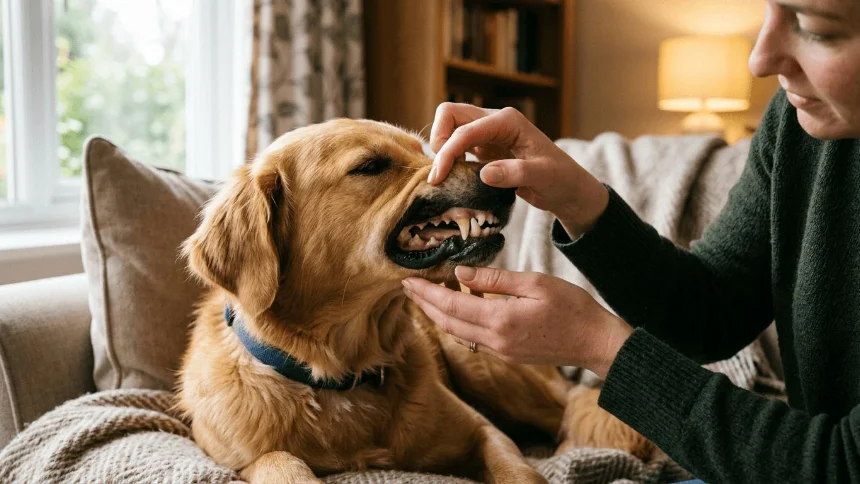
If your dog is comfortable with handling, you can make a brief visual check at home. Choose a quiet moment and use good lighting.
- Lift the lips gently to look at the outer surfaces of the teeth.
- Check whether the gums look pink and relatively even in color, or whether there is obvious redness, swelling, or bleeding.
- Look for visible tartar, broken teeth, unusual growths, or objects caught around the teeth.
- Notice whether your dog pulls away, flinches, or appears uncomfortable.
Do not force your dog’s mouth open or put your fingers deep inside it. Even a gentle dog may bite when experiencing pain. If your dog resists, stop and ask your veterinarian to examine the mouth.
A home check cannot reveal every dental problem. Disease can develop below the gumline, where it is not visible during an ordinary inspection.
5. What a Veterinary Dental Examination Can Reveal
Your veterinarian can assess the teeth, gums, tongue, and other visible structures in the mouth. If dental disease is suspected, a professional cleaning may be recommended.
A thorough dental assessment often requires general anesthesia so the veterinary team can safely examine the entire mouth, clean above and below the gumline, and take dental X-rays when indicated. X-rays can reveal problems affecting tooth roots and supporting bone that are not obvious from the surface.
The recommended treatment depends on what the examination reveals. Some dogs need professional cleaning, while others may require treatment for gum disease, a damaged tooth, or an oral infection.
Do not assume that scraping visible tartar off the tooth surface is enough. It does not address disease beneath the gumline and can injure the mouth if performed improperly.
6. How to Help Prevent Dental Problems at Home
Regular home care can help reduce plaque accumulation, although it cannot replace veterinary treatment when dental disease is already present.
Brush your dog’s teeth regularly
Brushing with a dog-specific toothbrush and toothpaste is one of the most useful ways to control plaque. Human toothpaste is not suitable for dogs because some ingredients, including xylitol in certain products, can be dangerous if swallowed.
Introduce brushing gradually. Start by letting your dog become comfortable with having its lips touched, then progress to brief contact with the teeth and gums. Reward calm behavior and keep early sessions short.
Daily brushing is ideal when tolerated. If your dog has painful gums, loose teeth, or a suspected oral infection, seek veterinary advice before attempting to brush the affected area.
Choose dental products carefully
Some dental chews, diets, and oral-care products can help reduce plaque or tartar. Look for products with evidence supporting their dental benefits, and choose an appropriate size for your dog.
Avoid extremely hard objects that can fracture teeth, including hard bones, antlers, and some rigid chew toys. A chew that seems durable can still damage a tooth.
Keep routine dental checks on the schedule
Ask your veterinarian how often your dog needs an oral examination. Small breeds, dogs with crowded teeth, and dogs with previous dental disease may need closer monitoring, but any dog can develop dental problems.
Do not wait for severe bad breath before arranging a check. Early dental care can help prevent discomfort and more complicated treatment later.
7. Can Treats or Food Fix Bad Breath?
Products marketed for fresher breath may temporarily mask odor, and some dental products can help control plaque. However, a pleasant smell after a treat does not mean that the underlying problem has been resolved.
If your dog already has significant tartar, inflamed gums, a broken tooth, or an oral infection, changing food or offering breath-freshening treats is unlikely to be enough.
A sudden change in breath odor deserves particular attention. Before trying multiple products, look for other symptoms and arrange a veterinary examination if the odor persists or your dog appears uncomfortable.
Your dog’s breath does not need to smell like toothpaste to be healthy. What matters is whether the odor is new or unusually strong, whether the gums and teeth appear healthy, and whether your dog can eat and behave comfortably.
Regular toothbrushing, appropriate dental products, and routine veterinary checks can make a meaningful difference. If bad breath persists or comes with pain, bleeding, drooling, or changes in appetite, do not rely on breath-freshening products alone. Find the underlying cause so your dog can receive the care it needs.