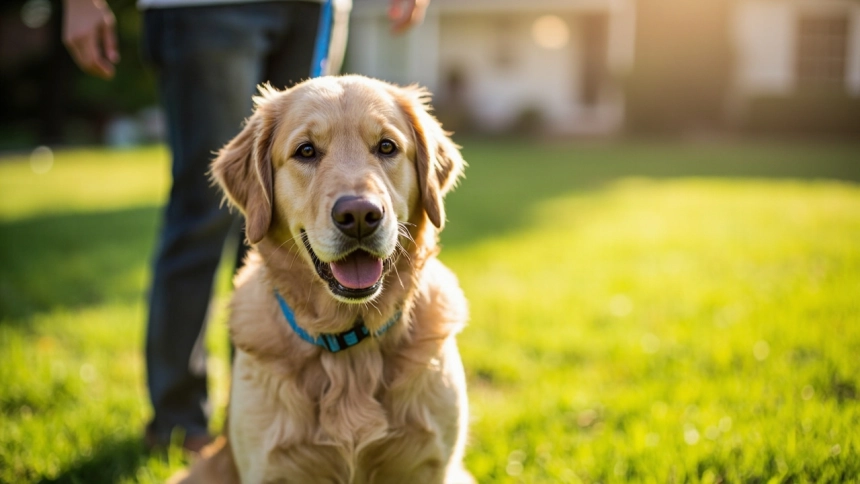
My golden retriever used to dislocate my shoulder on every walk. Not exaggerating. By the third block, I was walking sideways just to stay upright. Every tutorial I found online either required equipment I did not own or patience I definitely did not have at six in the morning before coffee.
Leash pulling is not a character flaw in dogs. It is a skill deficit, and like any skill, it gets better with the right instruction. The method that actually works does not involve punishment, prong collars, or letting your dog drag you in circles until someone gets tired. It involves teaching your dog that loose leash walking pays better than pulling ahead.
Why Dogs Pull in the First Place
Dogs pull because pulling works. When a dog lunges toward a squirrel and reaches the end of the leash, they still got closer to the squirrel. The leash tension did not punish the behavior, it just stopped the movement. From the dog’s perspective, lunging forward = getting closer to interesting things. That is a reliable reward pattern, even if humans experience it as frustration.
Even without squirrels, walks themselves are inherently rewarding for dogs. New smells, other dogs, people, sounds, all of it is fascinating. A dog who is excited to explore has every reason to move faster than their human. The leash becomes a frustration barrier, not a communication tool.
The Core Technique: Stop and Wait
The foundation of loose leash training is deceptively simple. When your dog pulls, you stop walking. Completely. You become a tree. You do not tug back, you do not reel your dog in, you do not lecture. You stand still with a loose leash until your dog looks back at you or shifts their weight backward.
Once the leash goes slack, you resume walking. Reward the position you want. This teaches your dog that pulling forward stops progress, and staying close or returning attention gets the walk moving again. Most dogs figure this out within a few sessions once the rule is consistent.
The mistake most people make is waiting too long. If you only stop for three seconds before resuming, your dog learns that pulling eventually works. You need to wait long enough that the pulling behavior completely extinguishes before you move again.

Setting Up for Success With Equipment
A six-foot flat leash gives you the best control. Retractable leashes teach dogs that tension means freedom to explore, which actively undermines loose leash training. A simple nylon or leather leash with a standard clip-on collar works fine for most dogs.
For dogs who are chronic pullers or who have strong chase instincts, a front-clip harness reduces pulling power by redirecting momentum. This is not a solution on its own, but it makes the stop-and-wait technique more manageable while your dog is still learning.
Practicing in Low-Distraction Zones First
Do not start in the park or on a busy street. Practice inside your home or in a quiet yard where there are no squirrels, other dogs, or interesting smells competing for your dog’s attention. Once your dog can walk ten minutes on a loose leash in your living room, move to a quiet block. Then a busier one.
Each new environment is essentially a new training session. Do not expect your dog to generalize the behavior to all contexts immediately. The skill builds layer by layer, and rushing the process usually means going back to square one on harder terrain.
Bring high-value treats on practice walks. Small, soft treats that your dog loves work better than kibble. Reward the moment the leash goes slack, not after you have already been walking for ten seconds. Timing matters.
Common Mistakes That Prolong the Problem
Following your dog when they pull teaches them that pulling moves the whole pack forward. Yanking the leash back teaches them that leash tension equals resistance, which can make pulling more激烈 in reactive dogs. Both accidentally reinforce the behavior you are trying to eliminate.
Another mistake is ending walks when pulling starts. This teaches dogs that pulling gets them back home, which can become a strategy rather than a symptom. Instead, if your dog pulls the entire walk, go to a different spot in the same walk route and practice there instead of going home.
Inconsistency is the third big problem. If you allow pulling on some walks but not others, or on some days but not others, your dog cannot learn the rule. Everyone in the household needs to follow the same protocol, every single walk.

When to Call a Professional Trainer
If your dog is aggressive or highly reactive on leash, or if you have been training consistently for several weeks without progress, a certified professional dog trainer can identify issues you cannot see from the outside. Look for trainers with credentials like CPDT-KA or CAAB, and avoid anyone who recommends shock collars, prong collars, or dominance-based methods.
A few private sessions to establish the foundation correctly saves months of frustrated walks and prevents bad habits from becoming entrenched.