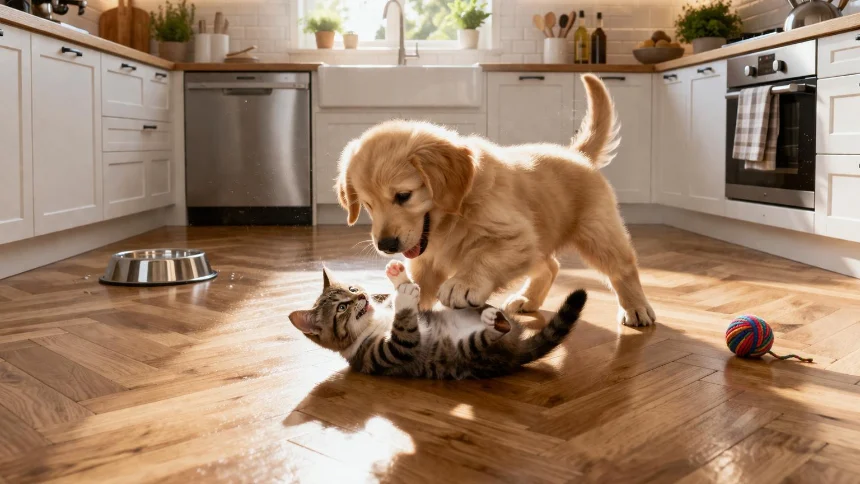
Bringing home a puppy or kitten means seeing your home through a completely different set of eyes. A loose charging cable, an open kitchen bin, or a houseplant sitting on a windowsill may seem harmless to you, but a curious young pet can quickly turn an ordinary household item into a safety risk.
The challenge is that puppies and kittens explore differently. Puppies often investigate with their mouths, while kittens may squeeze into narrow gaps, climb furniture, or chase dangling objects. Both can get into trouble in places you rarely think about.
You do not need to remove everything from your home. The goal is to identify likely hazards, limit access to dangerous areas, and create a space where your new pet can explore safely as they grow.
1. Start With the Living Room
The living room often becomes a puppy or kitten’s main play area, which makes it a good place to begin your safety check.
Secure wires and dangling objects
Electrical cords can tempt puppies to chew and kittens to paw or bite. Use suitable cord covers, secure loose cables behind furniture, and unplug unused devices when practical. Keep blind cords, curtain ties, ribbons, and other long strings out of reach because they can cause entanglement or swallowing hazards.
Pay attention to the space behind sofas and television stands. Pets may squeeze into these areas and chew wires that are difficult for you to see.
Remove small objects and unstable decorations
Coins, hair ties, rubber bands, buttons, batteries, and small children’s toys can be swallowed. Pick up items from the floor and use closed storage rather than leaving tempting objects on low tables.
Check tall lamps, plant stands, and decorative shelves too. A climbing kitten or an enthusiastic puppy may knock unstable objects over. Keep breakable decorations and heavy items that could fall out of reach.
2. Make the Kitchen Less Tempting
Kitchens contain food, rubbish, cleaning products, and plenty of interesting smells. Even a pet that seems well behaved may investigate when nobody is watching.
Keep food and rubbish secure
Use a bin with a secure lid, and do not leave food scraps, bones, wrappers, or discarded packaging where your pet can reach them. Store human food appropriately, including foods that can be dangerous to pets, such as chocolate, grapes, raisins, onions, and products containing xylitol.
Keep countertops clear when you leave the room. Kittens may jump onto them sooner than expected, while growing puppies may learn to reach surfaces they previously could not access.
Close off hazardous storage

Keep cleaning products, dishwasher detergent, sharp utensils, plastic bags, and other potentially dangerous items in closed cabinets. Child-resistant latches can help if your puppy learns to open cupboard doors.
Never assume that a product is safe simply because its container is closed or labelled as suitable for household use. Follow its directions and keep it inaccessible to your pet.
3. Check Bedrooms, Bathrooms, and Laundry Areas
These rooms are easy to overlook because pets may enter them only occasionally. However, they can contain small objects, medications, and places where a kitten or puppy might become trapped.
Store medication and personal care products safely
Keep prescription medicines, pain relievers, vitamins, supplements, cosmetics, and skincare products in closed storage. Put them away immediately after use, and check the floor if you drop a pill.
Do not leave dental floss, cotton swabs, hair ties, sanitary products, or small toiletry items within reach. Some may be swallowed and cause serious digestive problems.
Prevent access to washers, dryers, and small hiding places
Kittens often seek out warm, enclosed spaces, while puppies may investigate laundry baskets or chew clothing. Check washing machines and dryers before use, keep their doors closed when not in use, and never assume a quiet pet is safely settled inside a room.
Keep toilet lids closed when appropriate, and store laundry detergent and cleaning supplies securely. If a bathroom or laundry room contains hazards you cannot remove, use a closed door or a suitable barrier.
4. Secure Windows, Balconies, and Stairways
Fresh air and window views can be appealing, especially to cats. But an open window or an unsecured balcony can create a serious fall risk. A partially open window may also trap a cat if they try to squeeze through a narrow gap.
Use secure window screens designed to withstand pressure from pets, and check that they are firmly fitted. Ordinary insect screens may not be strong enough to prevent a determined kitten from pushing through.
Do not rely on a window ledge or balcony railing to keep your pet safe. Keep pets away from unsecured balconies, and make sure any pet barriers are stable, appropriately sized, and designed for the space.
For puppies, stair gates can prevent unsupervised access to stairs or rooms that are not yet safe. Choose a gate that cannot easily be pushed over or climbed, and check that its openings will not trap a small pet.
5. Review Houseplants and Household Chemicals
Some common houseplants are toxic to dogs or cats, and the risks are not always obvious from a plant’s appearance. Before your pet arrives, identify the plants in your home and check their safety for both species.
Lilies are particularly dangerous to cats. Certain types can cause severe kidney injury, and even small exposures may be an emergency. If you have cats, the safest approach is to keep true lilies and daylilies out of the home rather than relying on a high shelf.
Remember that moving a plant out of reach is not always enough. Kittens can climb, leaves may fall to the floor, and puppies may chew plants within seconds. Remove unsafe plants from accessible areas and secure fertilizers, pesticides, rodent baits, and garden chemicals.
Cleaning products also deserve attention. Keep pets away while products are being used, follow label directions, and allow treated surfaces to dry or ventilate as directed before letting your pet return.
6. Create One Safe Starter Area

You do not have to make every room accessible on the first day. In fact, giving a puppy or kitten a smaller, prepared area can make the transition easier while helping you supervise them.
Choose a quiet room or a suitably enclosed section of your home. Set up comfortable bedding, fresh water, age-appropriate food, and suitable toys. Puppies may also need a designated toilet area, while kittens need an accessible litter tray placed away from their food and water.
Make sure the space has no exposed wires, narrow gaps where your pet could become stuck, unstable furniture, or items they could swallow. Provide safe hiding and resting places without allowing access to dangerous spaces behind appliances or inside furniture.
Let your pet explore this area at their own pace. Once they are settling in and you can supervise them reliably, introduce other rooms gradually rather than opening the entire home at once.
7. Recheck Your Home as Your Pet Grows
Pet-proofing is not a one-time task. A puppy that cannot reach a coffee table today may be able to jump onto it in a few weeks. A kitten that once stayed on the floor may soon climb curtains, bookshelves, and kitchen counters.
Repeat your safety check whenever your pet becomes more mobile, starts climbing, or develops new chewing habits. Look for loose parts on toys, damaged cords, newly accessible shelves, and gaps that have become interesting hiding places.
Choose toys that are appropriate for your pet’s size and play style, and inspect them regularly. Remove damaged toys or items that can break into small pieces. Supervision remains important even in a pet-friendly room.
What to Do If Your Pet Gets Into Something Dangerous
If you suspect your puppy or kitten has swallowed medication, a toxic plant, a chemical, or another dangerous substance, contact a veterinarian or an appropriate animal poison service promptly. Do not wait for symptoms to appear, and do not induce vomiting or try a home remedy unless a veterinary professional specifically instructs you to do so.
If possible, keep the product packaging or take a photo of the plant or substance involved. This information can help the veterinary team assess the situation more quickly.
A safer home is built through small, consistent habits: putting things away, securing tempting hazards, checking rooms before use, and adjusting as your pet grows. With a little preparation, your puppy or kitten can spend less time encountering preventable dangers and more time learning, playing, and feeling at home.