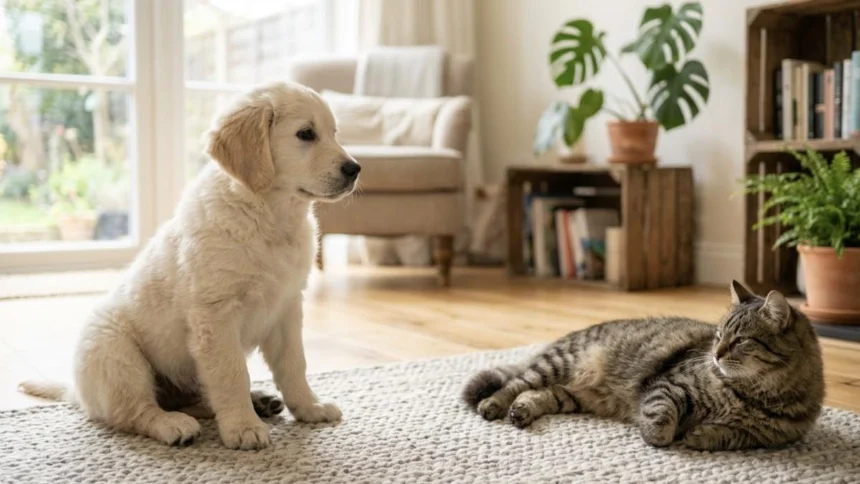
Watching a puppy and kitten grow up together can be wonderful, but their first meetings need careful planning. A playful puppy may chase without understanding that a kitten feels threatened, while a frightened kitten may scratch or run away and trigger even more chasing.
The goal is not to make them become friends overnight. It is to help both animals feel safe, learn each other’s signals, and build positive associations at a pace they can handle.
1. Give Each Pet a Safe Space First
Before introducing your puppy and kitten, prepare separate areas where each animal can eat, sleep, play, and retreat without being disturbed.
Your kitten needs a secure room with food, water, a litter box, hiding places, and access to safe elevated spots. Your puppy needs a comfortable resting area and opportunities for supervised play, feeding, and toilet breaks.
Use a closed door or a secure barrier to prevent unexpected encounters. A kitten should always have somewhere to escape that the puppy cannot reach. Baby gates can help, but make sure the kitten cannot squeeze through a gap that could trap or injure them.
Keep food bowls, beds, and favorite toys separate at first. This reduces competition and gives each pet time to settle into the home without feeling that its resources are being threatened.
2. Let Them Get Used to Each Other’s Scent
Animals gather a great deal of information through smell. Allowing your puppy and kitten to investigate each other’s scent before meeting face-to-face can make the first encounter less surprising.
Try these simple steps:
- Exchange small blankets or bedding that each pet has used.
- Let each animal explore the other’s room while the other pet is safely elsewhere, if this can be done without causing distress.
- Offer treats, meals, or gentle play while each pet notices the unfamiliar scent.
Watch how they respond. Sniffing and then calmly moving away is encouraging. Persistent barking, growling, frantic scratching at the door, or refusing to approach may mean that you need to slow down.
Do not push the bedding toward either animal or force them to investigate. The aim is to make the scent familiar without making it feel unavoidable.
3. Make the First Visual Introduction Short

Once both pets seem comfortable with the other’s scent, let them see each other from a safe distance. Use a secure barrier, such as a properly fitted pet gate, that prevents direct contact while allowing them to observe one another.
Keep your puppy on a leash during early introductions if needed, and make sure the kitten can retreat to a secure area. Choose a quiet room without food bowls, prized toys, or other distractions that could create tension.
Keep the first session brief. Reward your puppy for looking at the kitten and then turning back toward you. Let the kitten watch, hide, or leave as they choose.
End the session while both animals are still reasonably calm. Several short, positive encounters are generally more useful than one long meeting that ends in chasing or fear.
If either animal becomes overwhelmed, calmly increase the distance or end the session. Do not punish growling, hissing, or other warning signals. These behaviors communicate discomfort, and punishment can make the interaction more stressful.
4. Teach Your Puppy to Stay Calm
Puppies often explore by running, jumping, mouthing, and chasing. These behaviors may be normal puppy play, but they can frighten or injure a much smaller kitten.
Practice a few simple skills away from the kitten first:
- Responding to their name: Help your puppy turn toward you when called.
- “Leave it” or a similar cue: Reward your puppy for disengaging from something interesting.
- Settling calmly: Reward quiet behavior on a mat or beside you.
- Gentle leash walking: Practice moving away without pulling toward distractions.
During introductions, reward calm observation and voluntary disengagement. If your puppy becomes fixated, lunges, or repeatedly tries to chase, increase the distance and return to an easier stage.
Do not rely on the kitten to teach the puppy a lesson. A kitten should never have to defend itself to make the puppy stop.
5. Give Your Kitten Control Over the Interaction
A successful introduction is not just about controlling the puppy. Your kitten also needs the freedom to choose whether to approach, watch, hide, or leave.
Provide sturdy elevated resting places and hiding spots with more than one way out when possible. This helps prevent the kitten from feeling trapped if the puppy approaches.
Look for relaxed body language, such as exploring, sniffing, grooming, or resting normally. Warning signs can include flattened ears, a tucked body, a puffed-up tail, repeated hissing, swatting, or attempts to escape.
One hiss does not automatically mean the relationship will fail. It may simply be a request for more space. Calmly increase the distance and let the kitten recover instead of forcing another interaction.
Never hold the kitten in your arms and bring them close to an excited puppy. If the puppy jumps or the kitten struggles, both animals could be injured.
6. Supervise Every Direct Meeting
When both pets can see each other calmly through a barrier, you can begin carefully managed direct encounters. Keep the puppy on a leash and allow the kitten to move freely within a secure room.
Keep sessions short and provide enough space for both animals to disengage. Reward calm behavior, and interrupt unwanted chasing early by guiding the puppy away rather than shouting or grabbing at either animal.
Watch for patterns rather than judging a meeting by a single moment. A puppy that repeatedly stalks, corners, pins, or chases the kitten may need more management and professional guidance. A kitten that remains hidden, stops playing, or appears persistently frightened may also need a slower plan.
Do not leave them alone together simply because one meeting went well. Young animals can become excited quickly, and an apparently playful chase can escalate in seconds. Continue separating them whenever you cannot actively supervise.
7. Keep Food, Sleep, and Play Separate at First
Shared spaces can create tension even when the animals seem comfortable around each other. Feeding time is a good example: a puppy may try to eat the kitten’s food, while a kitten may feel unsafe approaching a bowl near an energetic dog.
Feed them in separate areas, and pick up food bowls when meals are finished. Keep litter boxes somewhere the puppy cannot access them. This protects the kitten’s privacy and prevents the puppy from eating litter or investigating waste.
Give each pet individual playtime, rest, and attention. A kitten needs opportunities to climb, pounce on suitable toys, and rest undisturbed. A puppy needs exercise, training, and naps without being expected to interact with the kitten.
Both animals should have access to their own comfortable resting places. Do not require them to share a bed, toy, or feeding area to prove that they get along.
8. Know When to Slow Down or Get Help

Some puppy-and-kitten pairs become comfortable quickly. Others need many gradual sessions over days or weeks. There is no universal timetable, and the animals’ behavior matters more than the calendar.
Return to separate spaces and seek advice from your veterinarian or a qualified animal behavior professional if you notice:
- Repeated chasing that the puppy cannot interrupt.
- Attempts to corner, grab, or bite the kitten.
- Persistent hiding, refusal to eat, or changes in litter-box habits.
- Repeated intense growling, lunging, or aggressive contact.
- Any injury, even if it initially appears minor.
If your puppy has a strong fixation on the kitten or a history of injuring small animals, do not assume training alone will make unsupervised contact safe. Some animals may never be suitable companions without careful long-term separation and management.
Also consider health precautions. Young pets may not have completed their vaccination and parasite-prevention plans. Ask your veterinarian when contact with other animals and shared environments is appropriate for your pets’ individual health status.
Frequently Asked Questions
How long does it take for a puppy and kitten to get along?
There is no fixed timeline. Some become comfortable after several gradual introductions, while others need weeks or longer. Move forward only when both animals remain relaxed and can disengage without pressure.
Should I let my puppy chase the kitten during play?
No. Chasing can frighten the kitten and may become dangerous as the puppy gets larger. Redirect the puppy to an appropriate toy or training activity and reward calm behavior around the kitten.
Can a puppy and kitten sleep in the same room?
Only consider this later, when both animals have shown consistent comfort and you can manage the environment safely. In the early stages, separate sleeping areas are safer because neither pet can be supervised while everyone is asleep.
What if my kitten keeps hissing at the puppy?
Give the kitten more distance and a secure retreat. Hissing is a warning that the kitten is uncomfortable, not a reason to force closer contact. If the fear persists or affects eating, drinking, or normal behavior, consult your veterinarian.
Final Thoughts
A puppy and kitten do not need to become instant best friends. They need safe spaces, patient introductions, positive experiences, and adults who recognize when either animal needs a break.
Let their comfort guide the process. By preventing chasing, protecting each pet’s resources, and supervising every direct meeting, you give them a better chance of developing a peaceful relationship over time.