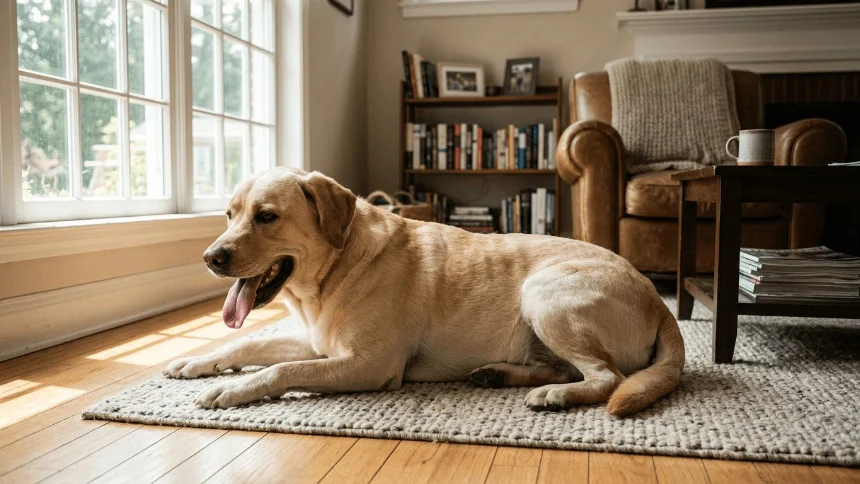
Your dog has been lying on the living room floor for twenty minutes, yet its mouth is still open and its breathing seems unusually fast. There has been no recent walk, no game of fetch, and the room does not feel particularly warm.
Dogs pant for many normal reasons. Panting helps them release heat, and it can increase after exercise or during moments of excitement. But persistent panting at rest, especially when it is unusual for your dog, can also signal pain, overheating, anxiety, or an underlying medical problem.
The key is to look at the whole picture: what your dog was doing beforehand, how its breathing looks, whether it can settle comfortably, and whether any other symptoms are present.
1. Why Do Dogs Pant?
Unlike humans, dogs rely heavily on panting to help regulate body temperature. Rapid airflow over moist surfaces in the mouth and respiratory tract helps release heat.
Panting is therefore expected after running, playing, walking in warm weather, or getting excited about a visitor. It should generally ease as your dog rests in a comfortable environment and cools down.
Some dogs pant more readily than others. Dogs with short, flat faces, including Bulldogs and Pugs, can have more difficulty moving air efficiently and may be particularly vulnerable to overheating.
However, breed, age, and weather do not explain every episode. If your dog pants heavily while resting in a cool room, repeatedly wakes up panting, or seems unable to get comfortable, do not automatically assume it is normal.
2. Common Reasons for Excessive Panting
Heat and recent exercise
After activity, a dog may continue panting while its body temperature returns toward normal. Warm, humid weather and poor ventilation can make cooling more difficult.
Move your dog to a cooler, well-ventilated place and allow it to rest with access to fresh water. Its breathing should gradually become more comfortable.
If panting remains intense, worsens, or is accompanied by weakness, vomiting, confusion, or collapse, treat the situation as a possible heat-related emergency rather than waiting for the dog to recover on its own.
Excitement, fear, or stress
Dogs may pant during car rides, veterinary visits, thunderstorms, unfamiliar encounters, or other stressful situations. You might also notice pacing, trembling, lip licking, yawning, or an inability to settle.
If the panting follows a clear emotional trigger, help your dog move to a quieter place and reduce the source of stress when possible.
Repeated episodes without an obvious trigger, or panting that continues after your dog has settled, deserve closer attention. Anxiety should not be used as an explanation for every unexplained change in breathing.
Pain or discomfort
Panting can be a subtle sign of pain, even when a dog is not crying or limping. Dental problems, abdominal discomfort, arthritis, injuries, and other painful conditions may cause a dog to breathe faster than usual.
Look for additional changes such as reluctance to move, restlessness, a hunched posture, reduced appetite, unusual sensitivity to touch, or difficulty finding a comfortable sleeping position.
If your dog suddenly begins panting at rest and appears uncomfortable, contact your veterinarian. Do not give human pain medication unless a veterinarian specifically directs you to do so.
Medication or an underlying health condition
Some medications, including corticosteroids such as prednisone, can increase panting. Never stop a prescribed medication abruptly without veterinary advice.
Excessive panting can also occur with respiratory or cardiovascular disease, hormonal conditions, fever, anemia, and other medical problems. In some cases, the breathing change appears before more obvious signs develop.
Because these conditions can look similar at home, persistent or unexplained panting needs professional assessment rather than guesswork.
3. How to Tell Normal Panting From a Warning Sign
Normal panting usually has a plausible explanation, such as exercise or warm weather, and improves as the dog rests and cools down. The dog remains alert, can move comfortably, and does not appear to be struggling for air.
More concerning patterns include:
- Panting at rest: Your dog is breathing heavily despite being calm in a comfortable, cool environment.
- New or persistent panting: The behavior is unusual for your dog or keeps returning without an obvious reason.
- Restlessness at night: Your dog repeatedly changes position, gets up, or cannot settle because of apparent discomfort.
- Changes in movement or appetite: Panting occurs alongside weakness, reluctance to walk, vomiting, or reduced interest in food.
- Unusual breathing effort: Your dog appears to work hard to breathe rather than simply panting with its mouth open.
Do not rely on the sound of breathing alone. A dog can have a serious problem even if it is quiet, and loud panting does not automatically mean an emergency. The effort involved, the dog’s overall condition, and how quickly the symptoms change all matter.

4. Emergency Signs You Should Never Ignore
Some breathing changes require immediate veterinary care. Do not wait for an appointment if your dog shows any of the following signs.
- Labored breathing: The belly or chest is working unusually hard, the neck is stretched forward, or your dog cannot seem to draw air comfortably.
- Blue, gray, or very pale gums: These can indicate a serious oxygen or circulation problem.
- Collapse or severe weakness: Your dog cannot stand normally, becomes unresponsive, or suddenly loses strength.
- Possible heatstroke: Heavy panting after heat exposure is accompanied by vomiting, drooling, confusion, poor coordination, or collapse.
- Sudden abdominal swelling with distress: A swollen belly combined with repeated unproductive retching, restlessness, or heavy panting can indicate bloat, a life-threatening emergency.
If your dog is struggling to breathe, seek emergency veterinary care immediately. Keep the environment calm, minimize unnecessary handling, and call the clinic while you are on your way if possible.
Do not force food, water, or medication into a dog that is having difficulty breathing or is not fully alert.
5. What to Do if You Suspect Overheating
Heat-related illness can progress quickly, especially in humid weather, enclosed spaces, or dogs that have difficulty breathing efficiently.
If you suspect overheating, move your dog out of the heat immediately. Begin cooling with cool or room-temperature water over the body, particularly the belly and limbs, while arranging urgent veterinary care. A fan can help increase evaporation.
Do not use an ice bath or cover the dog with wet towels that remain wrapped around its body and trap heat. Avoid delaying transport to the clinic in order to complete cooling at home.
Even if your dog appears to improve, heatstroke can cause internal complications that are not immediately obvious. Veterinary assessment is important when heatstroke is suspected.
Prevention matters too. Avoid strenuous exercise during the hottest part of the day, provide shade and water, and never leave a dog unattended in a parked car.
6. How to Observe Your Dog’s Breathing at Home
If your dog is comfortable and has no emergency signs, a few simple observations can help you explain the problem to your veterinarian.
Notice when the panting begins
Record whether it happens after exercise, during warm weather, during stressful events, after medication, or while your dog is resting or sleeping.
Look at breathing effort
Notice whether your dog is simply panting with its mouth open or appears to be working hard to move air. Look for an extended neck, pronounced abdominal movement, unusual posture, or difficulty lying down.
Check for other changes
Make a note of coughing, weakness, vomiting, changes in appetite, increased thirst, restlessness, or reduced activity. If it is safe to do so, a short video of the breathing can help your veterinarian understand what you observed.
Count resting breaths when appropriate
When your dog is asleep or resting quietly and is not panting, watch the chest rise and fall. One rise and fall counts as one breath. Count for 30 seconds and multiply by two, or count for a full minute.
Many healthy adult dogs at rest breathe roughly 10–30 times per minute, although individual rates vary. Repeated readings above your dog’s usual level, especially during sleep, should be discussed with a veterinarian. A single number cannot diagnose a condition, and you should never delay emergency care to obtain a count.
7. What to Expect at the Veterinary Visit
Your veterinarian will ask when the panting started, whether it happens at rest or after activity, what medications your dog takes, and whether any other symptoms have appeared.
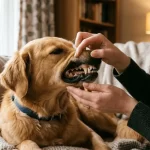
The examination may include checking temperature, heart rate, respiratory effort, gum color, and overall circulation. Depending on the findings, the veterinarian may recommend blood tests, chest X-rays, or additional investigations.
The right tests depend on the dog’s symptoms and stability. A dog with severe breathing difficulty may need immediate stabilization before more extensive testing can safely take place.
Do not change prescribed medication or try human treatments while waiting for an appointment unless your veterinarian advises you to do so.
8. Helping Your Dog Stay Comfortable
For everyday prevention, make sure your dog has access to fresh water, shade, and a comfortable resting area. Adjust exercise to the weather and your dog’s fitness, and give your dog time to cool down after activity.
Dogs with short, flat faces, excess body weight, advanced age, or known heart and respiratory conditions may need extra precautions. Ask your veterinarian about an appropriate activity plan if your dog has a medical condition that affects breathing or heat tolerance.
Most importantly, learn what is normal for your own dog. A brief bout of panting after a walk is very different from heavy breathing that begins unexpectedly while resting.
If the pattern changes, persists without a clear reason, or comes with signs of pain or illness, seek veterinary advice. If breathing is labored, gums turn blue or gray, or your dog collapses, treat it as an emergency. Recognizing the difference can make a real difference to your dog’s safety.