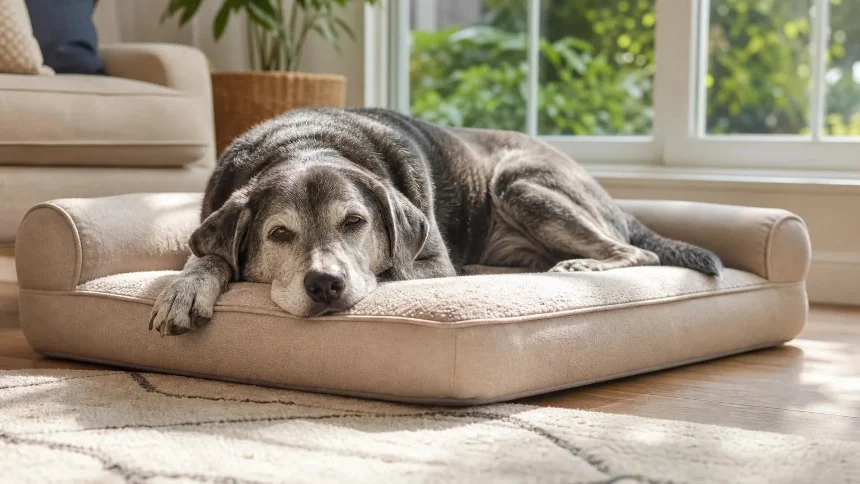
Finding a wet patch on your senior dog’s bed can be confusing. Perhaps your dog has always been house-trained, but lately you have noticed damp bedding after a nap or small drops of urine on the floor. You might even catch your dog looking surprised when you clean it up.
These accidents are not necessarily a training problem. Urine leakage can occur when a dog loses control of the bladder, but frequent urination, urinary tract disease, increased thirst, and mobility problems can also lead to accidents indoors. The reason matters because the right treatment depends on what is causing the problem.
If your older dog has started leaking urine, here is how to recognize the pattern, what your veterinarian may investigate, and how to keep your dog comfortable while you work out the cause.
What Does Urinary Incontinence Look Like in Senior Dogs?
Urinary incontinence means urine escapes involuntarily rather than being passed deliberately. One of the most recognizable signs is a wet spot where a dog has been sleeping or resting. Some dogs leak a little urine while walking, leaving small drops behind without seeming to notice.
Your dog may still ask to go outside, urinate normally during walks, and behave exactly as usual. That does not rule out incontinence. A dog can have normal, voluntary bathroom habits and still leak urine at other times.
Signs worth paying attention to
- Wet bedding or damp patches where your dog has been sleeping.
- Small amounts of urine leaking while your dog is relaxed or lying down.
- Urine dribbling while walking or shortly after urinating.
- Repeatedly licking the genital area or having persistently damp fur around it.
- More frequent bathroom trips, unusual urgency, or accidents that are new for your dog.
These signs do not establish a diagnosis on their own. The timing, amount of urine, and whether your dog seems aware of the accident can help your veterinarian distinguish incontinence from other urinary problems.
Why Might an Older Dog Start Leaking Urine?
Age can make certain urinary problems more likely, but it is not a diagnosis. Several conditions can look similar at home, and assuming that leakage is simply part of getting older may delay useful treatment.
Weak bladder outlet control

One common cause is urethral sphincter mechanism incompetence. The muscles and structures that help keep urine inside the bladder do not close effectively, allowing urine to escape without the dog’s awareness.
This problem is often seen in spayed female dogs, particularly medium and large breeds, although male dogs and other females can also be affected. Leakage may be most noticeable when the dog is sleeping or lying down, while normal urination outdoors continues.
Veterinarians can often manage this condition with appropriate treatment. The medication used depends on the individual dog, so do not try human incontinence products or leftover pet medication without veterinary guidance.
Urinary tract infections and bladder problems
A urinary tract infection can cause a dog to urinate more frequently, strain, or have accidents indoors. Some dogs may lick the genital area more often or show discomfort while urinating. Blood in the urine can occur, too.
Bladder stones and other urinary tract conditions can produce overlapping signs. A dog that repeatedly squats, passes only small amounts, or seems uncomfortable may have a problem that needs prompt assessment rather than routine house-training adjustments.
Infection and incontinence are not interchangeable diagnoses. A veterinarian may recommend urine testing to determine whether infection is present and whether additional investigation is needed.
Increased thirst and urine production
Sometimes the bladder is not the main problem. Conditions such as diabetes mellitus, kidney disease, and certain hormonal disorders can increase thirst and urine production. A dog may then struggle to stay dry for as long as it once did.
Notice whether the water bowl needs refilling more often, whether your dog asks to go outside repeatedly, or whether accidents have become larger and more frequent. These details can help distinguish involuntary leakage from an increased need to urinate.
Do not restrict water to prevent accidents. If your dog is drinking more than usual, arrange a veterinary assessment and explain the change.
Pain, mobility problems, or neurological disease
An older dog with painful joints may know it needs to go outside but struggle to stand, walk to the door, or reach the usual bathroom area in time. Weakness or certain neurological conditions can also interfere with normal bladder function.
If accidents happen alongside difficulty getting up, an altered gait, back pain, weakness in the hind legs, or changes in tail movement, tell your veterinarian. These clues may change which examinations are needed.
When Should You Contact a Veterinarian?

Arrange a veterinary appointment when a previously house-trained senior dog begins leaking urine or having repeated unexplained accidents. Even if your dog seems comfortable, a new urinary problem deserves investigation.
Contact a veterinary clinic promptly if you notice frequent attempts to urinate, straining, painful urination, blood in the urine, or a sudden increase in thirst. Your clinic can advise how quickly your dog should be examined based on the symptoms.
Seek emergency veterinary care if your dog repeatedly tries to urinate but produces little or no urine, especially if there is obvious discomfort. A urinary obstruction can be life-threatening. Collapse, severe weakness, or severe pain also requires urgent attention.
Do not wait to see whether a suspected inability to urinate improves overnight. Call an emergency veterinary service for instructions.
How Will a Veterinarian Find the Cause?
The first step is usually a discussion of what you have noticed, followed by a physical examination. Your observations are particularly useful because accidents may not occur during the appointment itself.
What information should you provide?
Before the visit, think about when the leakage happens and how it differs from your dog’s usual bathroom routine. Useful details include:
- Whether the wet spots appear during sleep, after activity, or throughout the day.
- Whether your dog still passes a normal stream of urine outdoors.
- Whether the accidents involve a few drops or a large amount.
- Any changes in thirst, appetite, energy, walking, or behavior.
- Your dog’s sex, spay or neuter status, current medications, and relevant medical history.
If it is safe and practical, a short video of your dog urinating normally may help the veterinarian understand the pattern. Never delay urgent care to collect a video or urine sample.
Tests your veterinarian may recommend
Urinalysis is often an important part of investigating urinary symptoms. Depending on the findings, the veterinarian may recommend a urine culture to check for bacterial infection, blood tests to assess other possible causes, or imaging such as X-rays or ultrasound.
The examination may also include assessment of the bladder, abdomen, mobility, and nervous system. Not every dog needs every test. The appropriate plan depends on the history, physical findings, and initial results.
The American College of Veterinary Internal Medicine published a consensus statement on diagnosing and managing urinary incontinence in dogs in 2024. It emphasizes identifying the underlying urinary disorder rather than treating all leakage as the same condition.
How Is Senior Dog Incontinence Treated?
There is no single treatment that works for every dog with urinary accidents. The goal is to identify the cause and choose a plan that addresses it while keeping the dog comfortable.
Treatment depends on the diagnosis
If the problem is caused by reduced urethral sphincter control, a veterinarian may prescribe medication to improve urine retention. Some dogs respond well to treatment, although the medication and monitoring plan must be tailored to the individual.
If a bacterial urinary tract infection is confirmed, treatment may involve an appropriate antibiotic selected by the veterinarian. Bladder stones, metabolic disease, and neurological conditions require different approaches. Some problems need further procedures or specialist assessment.
Never give human medication or leftover antibiotics on your own. The wrong drug or dose can cause harm and may delay the correct diagnosis.
What if treatment does not stop the leakage?
Keep track of how often accidents occur and whether their frequency or volume changes after treatment begins. If leakage continues, returns, or becomes worse, update your veterinarian rather than adjusting medication yourself.
Some dogs need a change in treatment or additional testing. Others may have more than one condition contributing to the problem. Follow-up appointments help determine whether the current plan is working and whether anything else needs attention.
Making Home Life Easier for a Dog With Incontinence
While the medical cause is being investigated or treated, a few practical changes can make cleanup easier and protect your dog’s skin and comfort.
Protect bedding and keep the skin clean
Use washable blankets or waterproof protective layers on your dog’s favorite resting places. Wash damp bedding promptly and keep the sleeping area dry. If urine repeatedly wets the fur or skin, gently clean the affected area with a pet-safe product recommended by your veterinarian and dry it thoroughly.
Persistent moisture can irritate the skin. If you notice redness, sores, a strong odor, or discomfort, ask your veterinarian whether the skin needs treatment. Avoid applying human creams or disinfectants unless your veterinarian approves them.
Offer more frequent bathroom opportunities
Take your dog outside more often, particularly after waking, after meals, and before bedtime. A dog that produces more urine or has difficulty reaching the door may benefit from a more accessible route and extra time outdoors.
If walking is difficult, consider whether a non-slip path or a nearby outdoor area would help. Keep the route clear and avoid forcing your dog to use stairs if they cause pain or instability.
Use absorbent products carefully
Washable pads or dog diapers may be useful in some situations, especially overnight or during travel. They are management tools, not treatments for the underlying problem.
Change soiled products promptly and check the skin regularly. A wet diaper left in place can trap moisture and contribute to irritation. Ask your veterinarian which products are suitable if your dog has sensitive skin or recurring urinary problems.
Should You Retrain a Senior Dog That Has Accidents?
If your dog has been reliably house-trained for years, sudden urinary accidents should not be treated as deliberate misbehavior. Scolding will not correct a bladder disorder, infection, or mobility problem, and it may make your dog anxious about going to the bathroom near you.
Instead, clean the area thoroughly with a pet-safe enzymatic cleaner, keep a predictable outdoor routine, and reward normal outdoor urination when appropriate. If your dog appears unable to reach the door in time, focus on access and medical assessment rather than stricter training.
Behavioral changes can sometimes contribute to inappropriate urination, but medical causes should be considered first when an older dog develops a new pattern. Your veterinarian can help determine whether further behavioral support is needed.
Frequently Asked Questions
Is urinary incontinence a normal part of aging?
No. Urinary problems become more common with age, but involuntary leakage is not something you should automatically accept as inevitable. Many causes can be managed, and an examination can help identify the right approach.
Why does my senior dog only leak urine while sleeping?
Leakage during sleep or relaxation can occur when the structures that keep urine in the bladder do not close effectively. However, the pattern alone cannot confirm the cause. A veterinarian can assess whether incontinence or another urinary condition is responsible.
Should I limit my dog’s water to reduce accidents?
No. Do not restrict water unless your veterinarian gives you specific instructions for a medical reason. Increased thirst may be an important symptom, and restricting water can worsen dehydration or complicate an underlying illness.
Can a dog with incontinence still have a good quality of life?
Yes. Many dogs can remain comfortable with appropriate treatment and a practical home-care routine. The important step is to identify the cause, follow the recommended plan, and keep your dog clean and comfortable.
Help Your Senior Dog Stay Comfortable and Dry
When a senior dog starts leaving wet spots around the house, it is tempting to blame age or assume that house-training has slipped. But the pattern of leakage can be an important health clue.
Arrange a veterinary assessment, note when the accidents occur, and watch for changes in thirst, normal urination, movement, or comfort. With the cause identified, many urinary problems can be managed more effectively than owners expect.
Your dog is not making a mess on purpose. A calm response, timely veterinary care, and a few changes at home can make a difficult problem easier for both of you.