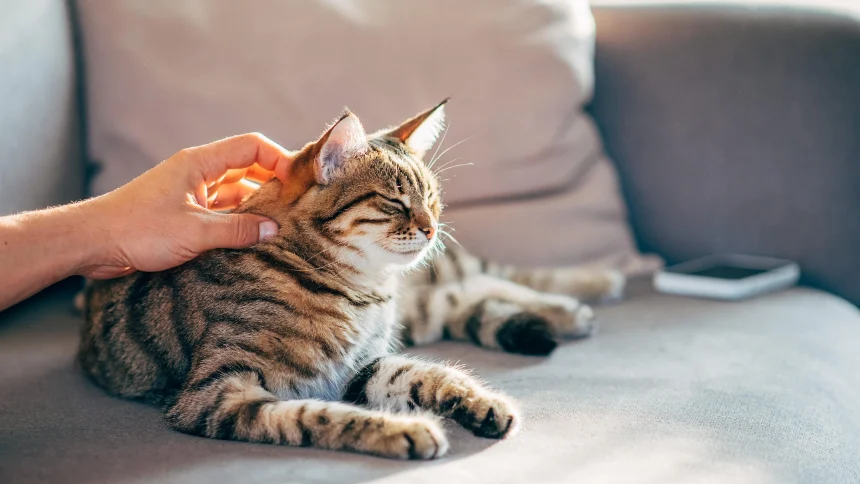
Your cat climbs onto your lap, leans into your hand, and seems perfectly happy to be petted. Then, without warning, they turn around and bite your fingers. Or perhaps your cat waits until you walk past before grabbing your ankle with both front paws.
These moments can feel confusing, especially when your cat usually enjoys your company. But a bite does not always mean a cat is angry or unfriendly. It may be an attempt to play, a request for space, a reaction to fear, or a response to discomfort.
Understanding what happens just before the bite is often the best way to change the pattern.
Not All Cat Bites Mean the Same Thing
Two cats can bite for completely different reasons, even if the behavior looks similar. Before deciding how to respond, consider what your cat was doing immediately beforehand.
- Play-related biting: Your cat stalks, chases, grabs, or pounces on moving hands and feet, often during energetic play.
- Petting-related biting: Your cat accepts touch for a while, then bites when the interaction becomes uncomfortable or overwhelming.
- Fear-related biting: Your cat feels threatened, cornered, or unable to escape and bites to make the person move away.
- Pain-related biting: Your cat reacts when a particular area is touched or when being lifted or repositioned.
These categories can overlap. A cat that is already excited by something outside the window may react more strongly to an ordinary touch, while a cat experiencing pain may suddenly become less tolerant of handling.
When Petting Goes From Pleasant to Too Much
Some cats enjoy being touched but have a relatively short tolerance for it. Repeated strokes that feel pleasant at first may eventually become irritating, or the cat may simply want the interaction to end.
The difficulty is that people often look for a dramatic warning, such as growling or hissing. Cats may communicate discomfort through much smaller movements first.
Watch for signs such as:
- The tail begins flicking or thumping against the sofa.
- The skin along the back ripples or twitches.
- The ears rotate sideways or backward.
- Your cat becomes stiff or suddenly stops relaxing.
- Your cat turns their head sharply toward your hand.
One signal alone does not prove that a bite is coming. Look for a change from your cat’s usual relaxed posture, especially when several signals appear together.
The simplest adjustment is to stop petting before your cat reaches that point. Try a few gentle strokes, pause, and see whether your cat actively seeks more contact. If they move away, turn their head, or become tense, let the interaction end.

Why Cats Target Hands and Ankles During Play
A moving hand under a blanket or a foot passing a doorway can trigger a cat’s instinct to stalk and pounce. For a cat, the movement may resemble an opportunity to chase something small, fast, and unpredictable.
This behavior is especially common in kittens and young cats, but adult cats can do it too. Cats with limited opportunities to chase, stalk, and catch appropriate toys may direct that energy toward people instead.
Human reactions can accidentally keep the game going. Pulling your hand away quickly, waving your fingers, or running when a cat grabs your ankle may make the interaction more exciting.
Instead, make toys—not body parts—the target of active play.
Choose toys that create distance
Fishing-rod toys let your cat chase and pounce while keeping your hands away from their claws and teeth. Small balls and suitable kicker toys can also provide outlets for chasing, grabbing, and kicking.
Build play into the daily routine
Offer regular interactive play sessions, adjusting their length and intensity to your cat’s age, health, and interest. Let your cat stalk and chase, and give them opportunities to catch the toy rather than endlessly pursuing something they can never reach.
Respond consistently when teeth touch skin
Stop the interaction calmly. Avoid shouting, hitting, spraying water, or using your hands to wrestle the cat away. Once your cat has settled, redirect future play toward an appropriate toy rather than immediately restarting a hand-based game.
If your cat frequently ambushes you at the same doorway or during the same part of the day, offer a play opportunity before that predictable period and consider changing the setup so your cat cannot repeatedly rehearse the ambush.
How to Tell Play From Fear
Play can look surprisingly intense. Cats may crouch, stare, chase, grab, and bite during a hunting-style game. The context matters: a cat stalking a moving toy is different from a cat hissing at a person who has cornered them.
Fear or defensive behavior may involve a low crouch, flattened ears, a tucked tail, hissing, growling, or attempts to retreat. Some frightened cats freeze rather than run. If the cat has no safe escape route, biting may be their way of creating distance.
When a cat appears frightened, stop approaching and give them room. Do not reach into a hiding place, pick them up, or insist on making contact. If the situation involves another animal, use a safe barrier or create distance rather than putting your hands between them.
Never punish a cat for warning you. Punishment can increase fear and may teach the cat that warning signals do not work, making future encounters harder to predict.
What If Your Cat Has Started Biting Out of Nowhere?
A sudden change deserves more attention than a long-standing play habit. A cat that previously welcomed handling but now snaps when touched may be experiencing pain or another medical problem.
Discomfort can come from dental disease, skin irritation, joint problems, injuries, or other conditions that are not obvious at home. A cat may also become more reactive after a frightening experience.
Arrange a veterinary examination if biting is new, escalating, happens when a particular body area is touched, or comes with changes in appetite, movement, grooming, or general behavior. Do not keep testing the painful area to see whether the reaction happens again.
If a bite breaks human skin, wash the wound thoroughly with soap and running water and seek prompt medical advice, particularly for puncture wounds or bites to the hand, face, or near a joint. Cat bites can become infected even when the wound looks small.
[内文图2:自然生活摄影,一只猫专注追逐远离主人手部的逗猫杆玩具,动作真实,普通客厅环境,没有夸张跳跃。Alt Text: A cat chasing a wand toy during interactive play with its owner.]
Make Your Cat’s Boundaries Easier to Read
You do not need to eliminate every bite by making your cat tolerate more handling. A better goal is to understand what your cat is communicating and arrange daily interactions so biting becomes less necessary or rewarding.
Keep play directed toward toys, make petting brief enough to remain comfortable, and allow your cat to walk away without being followed. Pay attention to patterns: when the bites happen, what preceded them, and whether certain types of touch seem to trigger a reaction.
Over time, these small changes can help you distinguish a cat asking to play from one asking for space. The most useful signal is not the bite itself, but the behavior that came before it.