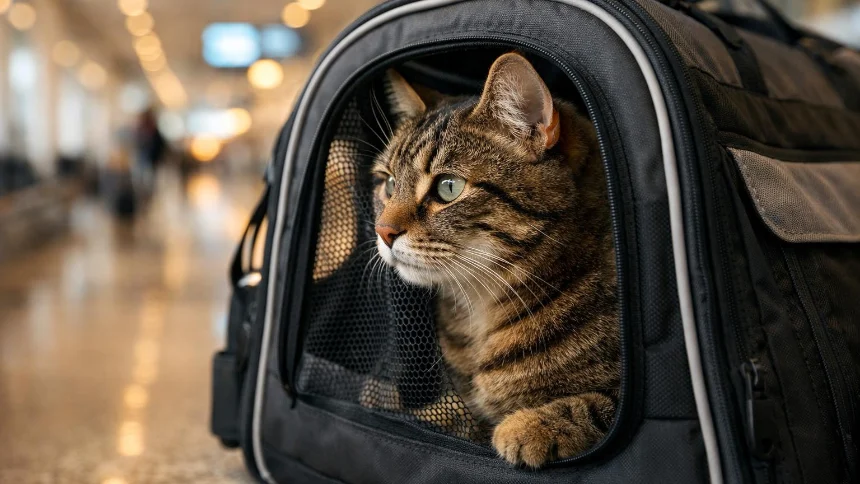
Flying with a cat takes more planning than simply booking a ticket and bringing a carrier to the airport. Airlines may limit the number of pets on each flight, require specific carrier dimensions, and ask for health documents. Your cat also needs time to become comfortable with the carrier and the unfamiliar sounds of travel.
The good news is that thoughtful preparation can make the experience more manageable. Here is how to plan a flight with your cat, from checking airline rules to settling in after arrival.
1. Check Whether Your Cat Is Ready to Fly
Before booking, consider your cat’s health, temperament, age, and ability to cope with unfamiliar environments. Some cats tolerate travel reasonably well, while others become extremely distressed by confinement, noise, or changes in routine.
Speak with your veterinarian before arranging a flight if your cat has a chronic condition, breathing problems, recent illness, or a history of severe travel anxiety. Short-nosed cats may face additional breathing risks during air travel.
Ask your veterinarian whether flying is appropriate and whether any health checks or preventive care are needed. If the trip is optional and your cat is likely to find it overwhelming, a trusted pet sitter may be a kinder choice.
2. Understand the Airline’s Pet Policy
Do not assume that every airline accepts cats in the cabin. Policies differ by airline, aircraft, route, and destination. Some airlines permit small cats in an approved carrier under the seat, while others restrict cabin pets or have different arrangements for animal transport.
Before paying for your ticket, confirm:
- Whether cats are permitted on your exact flight.
- Whether your cat can travel in the cabin or must use another approved arrangement.
- The maximum carrier dimensions and combined pet-and-carrier weight, if applicable.
- Pet fees, reservation limits, and check-in procedures.
- Required vaccination records, health certificates, and other documents.
Reserve your cat’s place as early as possible. Airlines may allow only a limited number of pets in the cabin, and a regular passenger reservation does not automatically reserve space for an animal.
For international travel, check the destination country’s official animal-entry rules well in advance. Depending on the route, requirements may include a microchip, rabies vaccination, blood tests, import permits, or a waiting period. Transit countries can have separate rules too.
Requirements vary by destination, so do not rely on a general checklist or assume that documents accepted for one trip will work for another.
3. Choose a Carrier That Meets the Rules
Your cat’s carrier must satisfy the airline’s requirements and provide adequate ventilation and secure containment. For cabin travel, it generally needs to fit beneath the seat in front of you, with exact size limits determined by the airline and aircraft.
Your cat should be able to sit and lie down comfortably without being forced into an unnatural position. Check the airline’s definition of an acceptable carrier before buying one; a carrier that works on one flight may not fit another aircraft.
Look for:
- Secure closures that your cat cannot easily push open.
- Good ventilation on multiple sides.
- A leak-resistant base with an absorbent liner.
- Comfortable access for placing your cat inside.
- Enough room for your cat to rest naturally within the permitted dimensions.

For cabin travel, never plan to put your cat in an overhead bin. The carrier must remain in the approved location and be secured as instructed by the airline crew.
4. Help Your Cat Get Used to the Carrier
One of the most useful things you can do is introduce the carrier well before departure. Leaving it until the morning of the flight can turn it into a source of fear.
Make the carrier part of everyday life
Leave the carrier open in a quiet room. Add familiar bedding or a blanket, and allow your cat to investigate at its own pace. You can place treats or meals near the entrance and gradually move them farther inside as your cat becomes comfortable.
Practice short sessions
Once your cat enters willingly, practice closing the door for a few seconds, then gradually increase the time. If your cat becomes frightened, return to an easier step rather than forcing the session to continue.
If practical, let your cat experience the carrier being lifted and carried around the home. Keep sessions calm and reward relaxed behavior. A cat that already associates the carrier with familiar smells and positive experiences may find travel less intimidating.
5. Prepare the Documents and Travel Kit
Keep essential documents together in a folder that is easy to reach. Carry digital copies as backups, but do not rely on your phone alone if original paperwork is required.
- Booking confirmation showing the pet reservation.
- Vaccination and veterinary records.
- Required health certificates, permits, and import documents.
- Microchip details and current contact information.
- Your veterinarian’s contact details and relevant medication.
- A recent photo of your cat in case identification is needed.
- Spare absorbent liners, waste bags, wipes, and familiar bedding.
Pack your cat’s usual food and any prescribed medication. Bring a small amount of familiar food rather than introducing a new diet during the trip. If your journey is long, plan how you will offer water and manage toileting safely.
6. Plan for Airport Security
Airport screening can be one of the most stressful parts of flying with a cat. At some security checkpoints, you may be asked to remove your cat from the carrier while the carrier is screened separately. Procedures can vary by airport and country.
Before travel day, check the relevant airport security guidance. If your cat is nervous or likely to bolt, ask security staff about the available procedure before opening the carrier.
A well-fitted harness may provide an extra layer of security during handling, but it does not replace a secure carrier. Keep doors and exits in mind, and avoid opening the carrier in busy public areas unless instructed and safely prepared to do so.

Allow enough time for check-in and screening. Rushing can increase stress for both you and your cat.
7. Keep Your Cat Safe During the Flight
Follow the airline crew’s instructions about where the carrier must be placed and when it can be handled. If your cat is traveling in the cabin, keep the carrier closed and secured as required.
Never give your cat sedatives or calming medication simply because the flight is approaching. Some medications can affect breathing, balance, or the ability to respond to stress. Ask your veterinarian about the risks and follow professional guidance if medication is considered necessary.
Do not assume that cargo transport is suitable for every cat. Transport conditions, temperature exposure, handling, and the animal’s health can affect risk. If your cat must travel outside the cabin, discuss the arrangements with your veterinarian and confirm the carrier and transport requirements with the airline.
For cats with breathing difficulties, significant health problems, or extreme anxiety, your veterinarian may advise against flying or recommend a different travel plan.
8. Help Your Cat Settle After Landing
After arrival, take your cat to a quiet, secure place before opening the carrier. Check that doors and windows are closed, and allow your cat to come out when ready rather than pulling it out.
Set up familiar food, fresh water, a litter box, and bedding. Keep the first few hours calm and avoid introducing too many unfamiliar people or animals at once.
Your cat may hide or eat less briefly after a stressful journey. Monitor its behavior, drinking, eating, and litter-box use. Contact a veterinarian if you notice persistent refusal to eat, repeated vomiting, unusual breathing, marked weakness, or other worrying symptoms. Difficulty breathing requires urgent veterinary attention.
Frequently Asked Questions
Can my cat sit on my lap during the flight?
Usually, no. When an airline permits a cat in the cabin, the carrier generally must remain in its approved location, often beneath the seat. Follow the specific airline’s rules and crew instructions.
Should I feed my cat before flying?
Ask your veterinarian about meal timing based on your cat’s age, health, and flight duration. Avoid making abrupt changes to feeding routines, and do not withhold food or water for extended periods without veterinary guidance.
Does my cat need a health certificate?
That depends on the airline, route, and destination. Some journeys require veterinary certification, vaccination records, or additional import documents. Verify the current rules with the airline and official authorities for every country involved.
Is flying stressful for cats?
It can be. Noise, confinement, unfamiliar smells, and changes in routine may cause stress. Carrier training and careful planning can help, but they cannot guarantee that every cat will cope well.
Final Thoughts
A safer flight starts well before you reach the airport. Check the airline’s exact rules, confirm destination requirements, choose an approved carrier, and give your cat time to get comfortable with it. Most importantly, consider your cat’s individual health and temperament when deciding whether flying is the right option.