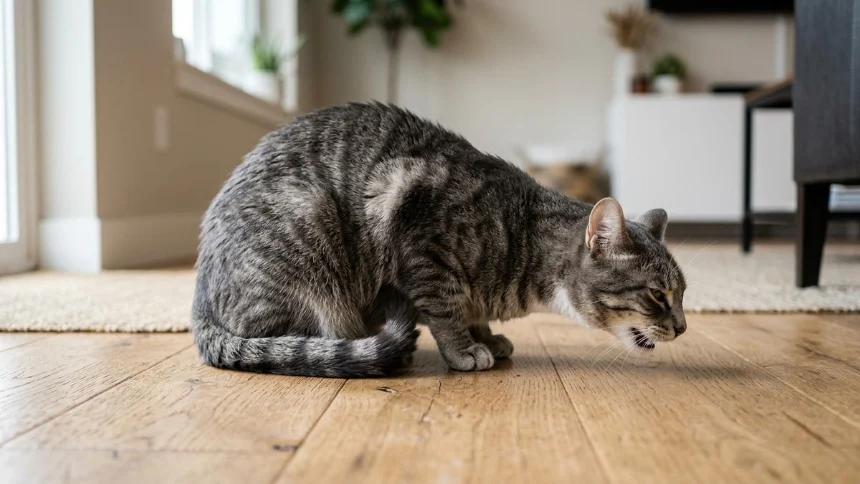
Your cat crouches low to the ground, stretches its neck, and makes a series of strange hacking sounds. You wait for a hairball to appear, but nothing comes out.
It is easy to assume your cat is simply trying to bring up a hairball. However, repeated hacking can sometimes be a sign of coughing rather than a digestive problem. Feline asthma and other respiratory conditions may produce movements and sounds that owners mistake for an attempt to vomit.
Knowing the difference is useful because a hairball and a breathing problem do not need the same response. Here is what to watch for, when to contact your veterinarian, and why repeated coughing should not be dismissed as normal cat behavior.

1. What a Hairball Episode Usually Looks Like
Hairballs develop when cats swallow loose fur while grooming themselves. Most of that fur passes through the digestive tract, but some may collect in the stomach and eventually be brought up.
During a typical hairball episode, a cat may crouch, contract its abdominal muscles, gag, and retch. A wad of fur may eventually appear, sometimes mixed with fluid or food.
However, not every hairball attempt produces a visible hairball. That makes it difficult to identify the cause from one episode alone.
Occasional hairballs can happen, especially in cats that shed heavily or have long coats. Frequent episodes, repeated unsuccessful retching, vomiting, reduced appetite, or changes in behavior deserve veterinary attention rather than being automatically attributed to grooming.
2. Signs That May Point to Coughing Instead
A cough is an attempt to clear or respond to irritation in the airways. Cats may lower their bodies, extend their necks, and produce a dry, hacking sound. Because these movements can resemble retching, the distinction is not always obvious.
Look for patterns such as:
- A dry hacking sound: Your cat repeatedly hacks without bringing up fur, food, or other material.
- A low crouch: The chest and body move with each cough while the neck stretches forward.
- Repeated episodes: The same behavior happens on different days or becomes more frequent.
- Wheezing or noisy breathing: You notice unusual sounds while your cat breathes.
- Changes after activity: Coughing or breathing discomfort seems to occur after play or exertion.
None of these signs proves that your cat has asthma. Respiratory infections, airway irritation, parasites, and other medical conditions can also cause coughing. A veterinarian needs to assess the full picture.
One of the most useful things you can do is record a short video of an episode if it is safe to do so. Cats may behave normally by the time they reach the clinic, and a video can help your veterinarian understand what you observed.
3. Why Feline Asthma Deserves Attention
Feline asthma is an inflammatory condition affecting a cat’s lower airways. In affected cats, the airways can become inflamed and narrowed, making breathing more difficult. Some cats experience occasional coughing, while others develop more serious episodes of respiratory distress.
Potential triggers may include airborne irritants such as cigarette smoke, scented sprays, dusty environments, or certain particles in the air. Triggers vary between cats, and it is not always possible to identify one specific cause.
Signs that may occur with feline asthma include:
- Recurring dry coughing or hacking.
- Wheezing or unusual breathing sounds.
- Periods of rapid or effortful breathing.
- Crouching low with the neck extended during an episode.
- Reduced tolerance for activity in some affected cats.
Asthma cannot be confirmed by appearance alone. Your veterinarian may recommend chest X-rays and other tests to investigate the symptoms and rule out conditions that can look similar.
With appropriate veterinary care, many cats with asthma can be managed over the long term. Treatment may include prescribed anti-inflammatory medication and, when indicated, medication to help open the airways. Never use a human inhaler or cough medicine for your cat unless a veterinarian has specifically instructed you to do so.
4. When Coughing Becomes an Emergency
A brief coughing episode in a cat that quickly returns to normal is not always an emergency, but breathing difficulty should never be watched at home in the hope that it will pass.
Seek emergency veterinary care immediately if your cat:
- Breathes with its mouth open while resting.
- Struggles to breathe or visibly uses its abdomen to push air in and out.
- Has blue, gray, or very pale gums or tongue.
- Collapses, becomes extremely weak, or appears unable to settle because of breathing discomfort.
Keep your cat as calm as possible and minimize handling while arranging emergency care. Stress and unnecessary movement may worsen breathing difficulty. Do not force food, water, or medication into a cat that is struggling to breathe.
If your cat has repeated coughing but is breathing comfortably between episodes, contact your veterinarian promptly to arrange an examination. A recurring cough should not be ignored simply because your cat still eats, plays, or behaves normally at other times.
5. What You Can Do at Home While Waiting for Advice
Home adjustments can reduce exposure to potential irritants, but they cannot replace an examination when coughing is persistent or recurring.
- Avoid smoke and strong fragrances. Keep your cat away from cigarette smoke, incense, aerosol sprays, and heavily scented cleaning products.
- Consider litter dust. If your litter produces a visible cloud of dust, ask your veterinarian whether switching to a lower-dust option would be appropriate.
- Keep a symptom record. Note when episodes happen, how long they last, and whether you notice wheezing, vomiting, or changes in activity.
- Record an episode when safe. A short video may help distinguish coughing from retching, but never delay emergency care to obtain one.
- Do not experiment with medication. Human cough remedies, essential oils, and leftover pet medication can be unsafe or inappropriate.
If your cat also produces hairballs, regular brushing may reduce the amount of loose fur it swallows. However, grooming changes will not treat asthma or another underlying respiratory condition.

6. How to Help Your Veterinarian Find the Cause
Before the appointment, think about how often the episodes occur and what happens immediately before and afterward. Does your cat actually bring up a hairball? Is the sound dry and repetitive? Does breathing return to normal right away? Have you noticed changes in appetite, energy, or activity?
Your veterinarian may examine your cat, listen to its lungs, and recommend chest imaging or additional tests depending on the symptoms. Because several conditions can cause similar signs, the evaluation may involve ruling out more than one possibility.
Do not wait for a certain number of coughing episodes before seeking advice. Frequency matters, but the severity of the breathing changes and your cat’s overall condition matter just as much.
The next time your cat makes a hacking sound, pay attention to what happens rather than automatically assuming it is a hairball. A single episode may have a simple explanation, but recurring coughing deserves investigation. Recognizing that difference can help your cat receive the right care sooner.