Your cat walks from the living room to the hallway, pauses by the front door, checks the window, and then repeats the same route ten minutes later. It may look as though your cat has an important appointment to keep.
For many cats, these little patrols are simply part of how they explore and monitor their surroundings. Cats use familiar routes, scent cues, elevated resting spots, and observation points to understand what is happening around them.
But there is a difference between a relaxed cat checking familiar places and a cat that seems unable to settle. The key is to look at the purpose, intensity, and pattern of the behavior rather than the walking alone.
Why Cats Keep Checking the Same Places
Cats are observant animals. Even in a comfortable home where food appears regularly, they still have natural motivations to investigate movement, monitor their surroundings, and keep track of familiar spaces.
A cat may repeatedly visit a doorway because sounds or smells drift in from the other side. A window offers a view of birds, passing people, neighborhood cats, and changing light. A hallway may connect several important areas, making it a natural route to check throughout the day.
Some cats also revisit places where they have rubbed their cheeks or body against furniture. These behaviors help them interact with familiar scents in their environment.
Routine matters, too. A cat may become accustomed to checking the kitchen before mealtime or watching the front door when family members usually return home. Repetition by itself does not mean something is wrong.
When the Window Becomes More Than a View
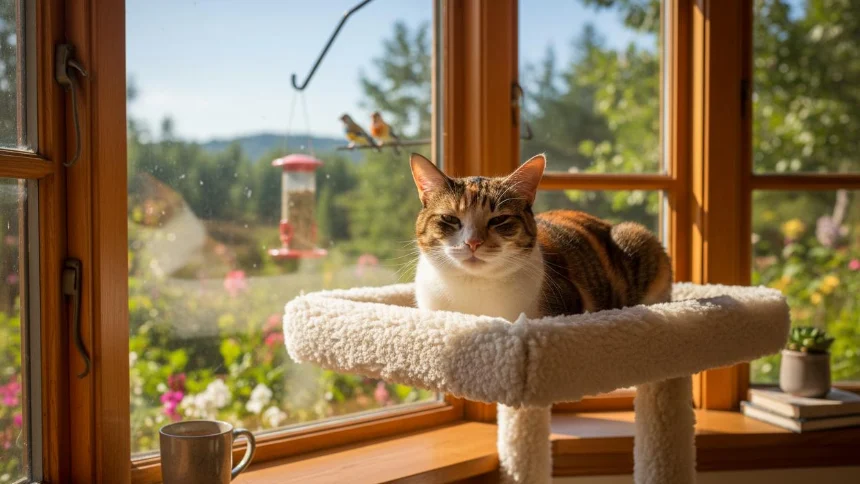
Watching the outdoors can be rewarding for an indoor cat. Birds moving across the garden, leaves blowing in the wind, and people walking past provide changing sights and sounds.
However, an unfamiliar cat outside can create a different reaction. Your cat may stare intensely through the glass, pace near the window, vocalize, or become unusually alert. Some cats remain agitated after the outdoor animal has disappeared.
This can be especially challenging when your cat cannot approach or move away from the animal they are watching. In some cases, that arousal may be redirected toward another pet or a person who happens to be nearby.
If you notice this pattern, observe whether the patrols begin after a particular outdoor cat appears. Temporarily limiting the view with a curtain or adjusting access to that window may help. You can also discourage neighborhood cats from lingering near the house without frightening or harming them.

Is Your Cat Bored or Looking for Something to Do?
Indoor cats can have safe, comfortable lives while still lacking opportunities to use their natural hunting and exploring skills. If the environment offers little variation, a cat may repeatedly circle the same areas or seek activity by following people around the home.
Other clues may include frequent attention-seeking, restless bursts of energy, persistent attempts to engage people, or intense interest in small movements around the house. These behaviors do not prove boredom on their own, but they can suggest that your cat would benefit from more engaging activities.
Instead of trying to stop every patrol, give your cat more worthwhile things to investigate.
Make play feel like a hunt
Use a wand toy to imitate the movement of prey, allowing your cat to stalk, chase, and catch it. Short sessions spread across the day may suit many cats better than one long session. Let your cat pause when they need to, and adapt play to their age and physical ability.
Add vertical space and observation spots
A stable cat tree, secure shelf, or window perch can provide a new perspective without requiring more floor space. Choose locations where your cat can observe the room or outdoors while still having a way to retreat.
Offer simple food puzzles
Food puzzles and small, supervised opportunities to search for treats can add mental stimulation. Begin with an easy option so your cat can succeed, and make sure the activity does not interfere with their normal meals or dietary needs.
What Patrols Can Reveal in a Multi-Cat Home
When several cats share a home, repeated movement through doorways and hallways may sometimes reflect tension rather than curiosity.
One cat might wait near a doorway while another hesitates to pass. A cat may repeatedly check the location of another animal, avoid a particular room, or change routes to reach food or the litter box. Not all conflict involves fighting. Staring, blocking access, chasing, and quietly avoiding shared areas can also affect how comfortable cats feel.
Look at the whole layout of the home. Can each cat reach food, water, resting areas, scratching surfaces, and litter boxes without having to pass another cat that makes them uncomfortable?
Where possible, provide multiple resources in separate locations. Add more than one route through busy areas, and create elevated or sheltered resting places. Cats should be able to move away from each other rather than being forced into close contact.
If conflict has developed between cats that previously lived together peacefully, do not force them to share a space or punish their warning signals. Persistent conflict may require a gradual reintroduction plan and advice from a veterinarian or qualified feline behavior professional.

When Repeated Walking May Be a Warning Sign
Relaxed exploration usually fits into the rest of a cat’s normal routine. Your cat can pause, rest, eat, play, and respond to familiar interactions.
By contrast, repeated pacing that seems difficult to interrupt, a sudden increase in activity, or a cat that appears distressed deserves closer attention. A new behavior should not automatically be dismissed as a personality quirk, particularly in an older cat or one showing other changes.
Contact your veterinarian if the behavior is new or persistent, or if it occurs alongside changes such as reduced appetite, altered sleep, weight loss, unusual vocalization, confusion, or reluctance to jump. Pain, illness, sensory changes, and other medical issues can sometimes affect behavior.
If your cat is repeatedly entering the litter box, straining, or making frequent attempts to urinate with little or no urine produced, seek emergency veterinary care, especially for a male cat. Urinary obstruction can be life-threatening and should not be mistaken for ordinary restlessness.
How to Understand Your Cat’s Usual Route
For a few days, observe when your cat starts patrolling, where they stop, and what happens immediately beforehand. Note whether the behavior follows mealtimes, activity outside the window, interactions with another pet, or periods when the home is quiet.
Also notice your cat’s body language. A loose posture and occasional pauses suggest something different from tense muscles, flattened ears, persistent staring, or an inability to settle.
You do not need to interrupt every trip down the hallway. Regular patrols may be a perfectly ordinary part of how your cat experiences home. By providing opportunities to play, explore, rest, and avoid unwanted encounters, you can make those familiar routes more rewarding—and recognize when a change deserves closer attention.