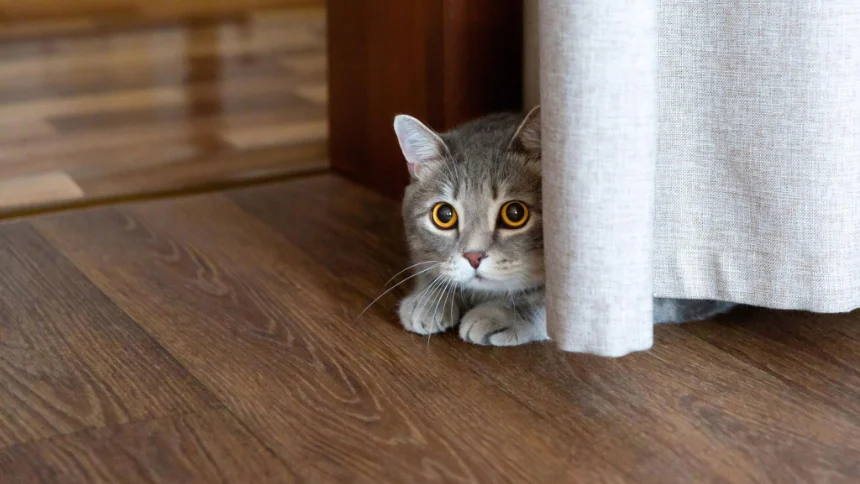
Cats have a talent for disappearing just when you want to spend time with them. One minute, your cat is stretched out on the sofa; the next, they are tucked behind a curtain or sleeping under the bed. Often, this is perfectly normal. But when hiding becomes a new or unusually frequent habit, it may be worth paying closer attention.
The important question is not simply where your cat hides. It is whether their behavior has changed, what else is happening around them, and how they act when they feel safe.
Why Hiding Can Be Normal for Cats
For cats, a quiet hiding place can offer comfort, warmth, privacy, and a sense of control. A covered bed, cardboard box, space beneath a chair, or high shelf may feel safer than an exposed spot in the middle of a busy room.
Some cats also prefer to rest away from household activity. A cat that spends part of the day alone is not necessarily lonely, unhappy, or afraid. Individual personalities differ, and some cats naturally seek more privacy than others.
Look at your cat’s overall routine. If they eat normally, use the litter box as usual, move comfortably, and come out to play or socialize on their own terms, a favorite hiding place may simply be part of their daily life.
When Hiding May Signal Stress
A cat that suddenly spends much more time out of sight may be responding to something that makes the home feel less predictable or secure. Cats can be sensitive to changes that seem minor to people.
Common triggers include:
- Visitors and unfamiliar activity: New people, children running around, or workers entering the home can make a cat retreat.
- Changes in the household: Moving furniture, renovations, a new baby, or a change in daily routine may disrupt a cat’s familiar environment.
- Conflict with another pet: A cat may hide to avoid being chased, blocked from a doorway, or intimidated near food, water, or the litter box.
- Unexpected noises: Fireworks, construction, loud appliances, and sudden bangs can make hiding feel like the safest response.
Notice what happens before your cat disappears. If the behavior follows a particular sound, visitor, or interaction with another animal, you may be able to identify the trigger.

Small Signs That Your Cat Is Not Feeling Comfortable
Hiding is only one part of feline body language. A cat that feels threatened may crouch low, hold their ears sideways or backward, keep their muscles tense, or remain unusually still. Dilated pupils, a tightly tucked tail, hissing, and repeated attempts to move away can also signal fear or discomfort.
Pay attention to the combination of signs rather than relying on one detail. For example, wide pupils can occur in different situations, including play and excitement. The surrounding circumstances and your cat’s usual behavior help provide context.
It is also important to respect a cat’s request for space. Reaching into a hiding place, pulling the cat out, or repeatedly approaching them can make an already uncomfortable situation worse.
How to Help a Hiding Cat Feel Safer
Give them a reliable retreat
Provide a quiet hiding place where your cat will not be disturbed. A covered cat bed, sturdy cardboard box, or accessible elevated resting spot can work well. Make sure the location is safe and that your cat can enter and leave freely.
In a home with multiple pets, provide separate resting places and make sure one animal cannot easily trap another in a corner or block access to essential resources.
Keep essential resources accessible
Your cat should be able to reach food, water, and a clean litter box without passing a pet or person they fear. In a multi-cat household, separate resources can reduce competition and give each cat more freedom to choose where they spend time.
Do not put food directly inside the hiding place or repeatedly reach in to check on your cat. Instead, keep resources nearby at a comfortable distance and observe whether your cat is eating and drinking normally.
Let your cat choose when to come out
Sit quietly in the same room if your cat tolerates your presence, and avoid staring, leaning over them, or blocking their exit. You can gently toss a treat nearby or offer a familiar toy, but allow your cat to decide whether to engage.
When your cat does emerge, keep the interaction calm. A quiet approach and the freedom to retreat again can help rebuild confidence more effectively than forcing contact.
Make changes gradually
If a new pet or household change is causing tension, slow things down. Give the cat time in a secure area, introduce unfamiliar animals gradually, and avoid forcing face-to-face interactions. If the stress continues or relationships between pets become difficult, a veterinarian or qualified feline behavior professional can help you develop a more suitable plan.
Could Hiding Be a Sign of Illness or Pain?
Yes. Cats may withdraw when they feel unwell, and they do not always show obvious signs of pain. A sudden change in hiding behavior should not automatically be blamed on anxiety, especially when there is no clear environmental trigger.
Watch for other changes, including:
- Eating or drinking noticeably less than usual.
- Reduced interest in play, interaction, or familiar activities.
- Unusual stiffness, reluctance to jump, limping, or a hunched posture.
- Vomiting, diarrhea, or changes in urination or litter box habits.
- Unusual vocalizing, sensitivity to touch, or changes in grooming.
Contact your veterinarian if your cat is hiding more than usual, particularly if the change is sudden, persistent, or accompanied by other symptoms. If your cat has not eaten for 24 hours, seek prompt veterinary care. Difficulty breathing, collapse, or repeated straining to urinate with little or no urine requires emergency veterinary attention.

How to Tell Whether Things Are Improving
Progress does not always mean your cat stops hiding. A more useful sign is that they begin returning to their normal routine: coming out to eat, exploring when the home is quiet, playing, grooming, or choosing to spend time near family members.
Try keeping a simple record of when the hiding occurs, what happened beforehand, and whether appetite, energy, or litter box habits have changed. This can help you identify patterns and give your veterinarian useful information if an examination is needed.
A cat’s hiding place is not necessarily a problem to solve. Sometimes it is simply where they feel most comfortable. The goal is to make sure your cat has a safe place to retreat to, the freedom to come and go, and the care they need when a change in behavior suggests something more is going on.